

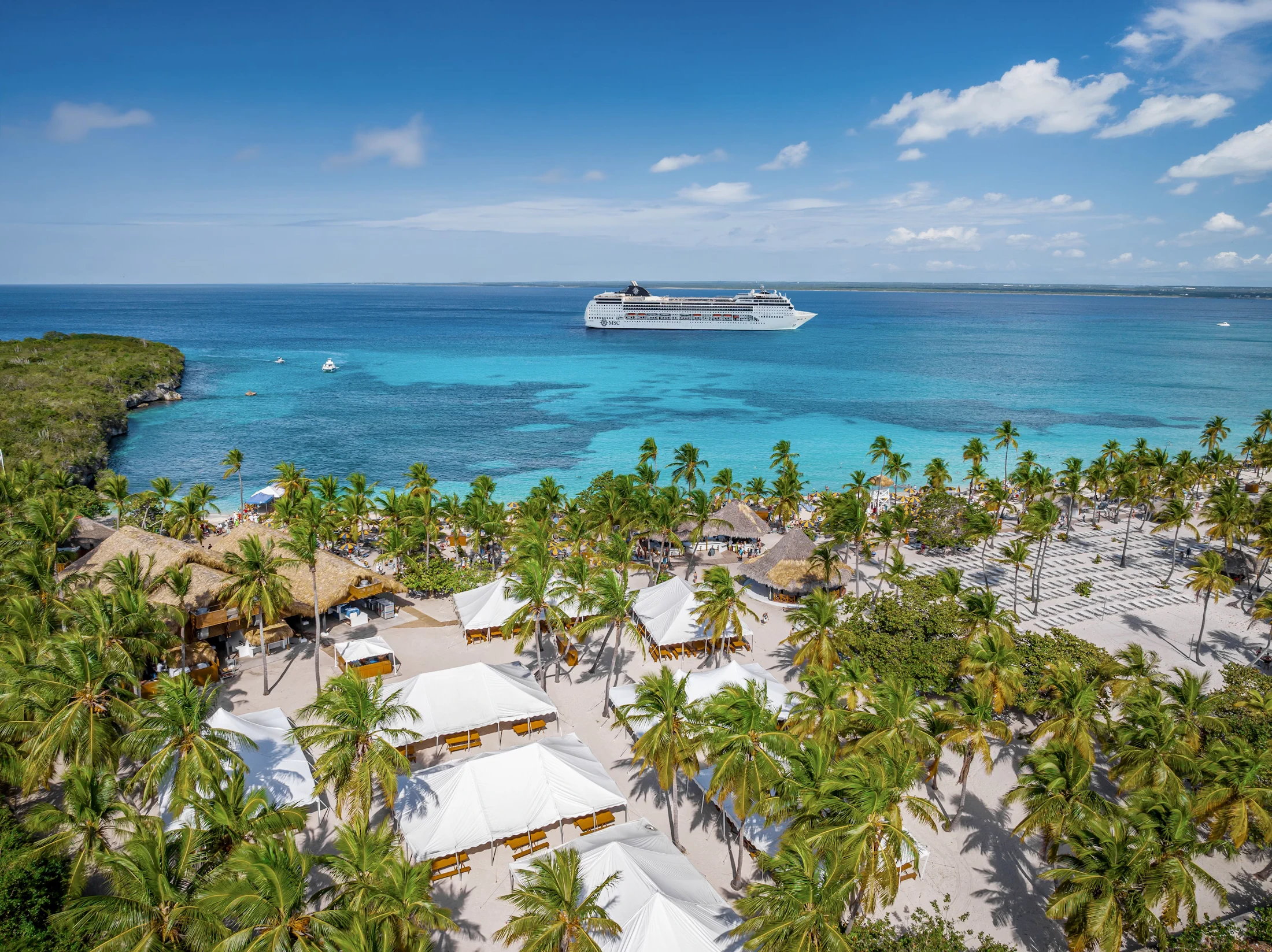
MSC Cruises passengers sailing from the Dominican Republic will soon have a new private-island-style destination to explore.
Catalina Sugar Beach is being developed on Catalina Island, a protected island just off the coast of La Romana. The upgraded beach destination will combine the island’s white sand, clear Caribbean water and coral reefs with new dining, bar and recreational facilities.
The project is especially notable because it gives MSC Cruises another purpose-built Caribbean beach experience. However, unlike Ocean Cay MSC Marine Reserve in The Bahamas, Catalina Sugar Beach will not be an MSC-exclusive private island. It is being developed through a joint venture involving CTL Maritime, part of MSC Group, and Casa de Campo Resort & Villas. Other cruise lines and private guests from Casa de Campo will also be able to visit.
For MSC cruisers, Catalina Sugar Beach will primarily be a feature of the cruise line’s new year-round Southern Caribbean itineraries aboard MSC Opera.
What Is Catalina Sugar Beach?
Catalina Island is a small island located off the southeastern coast of the Dominican Republic, close to MSC Cruises’ new homeport in La Romana.
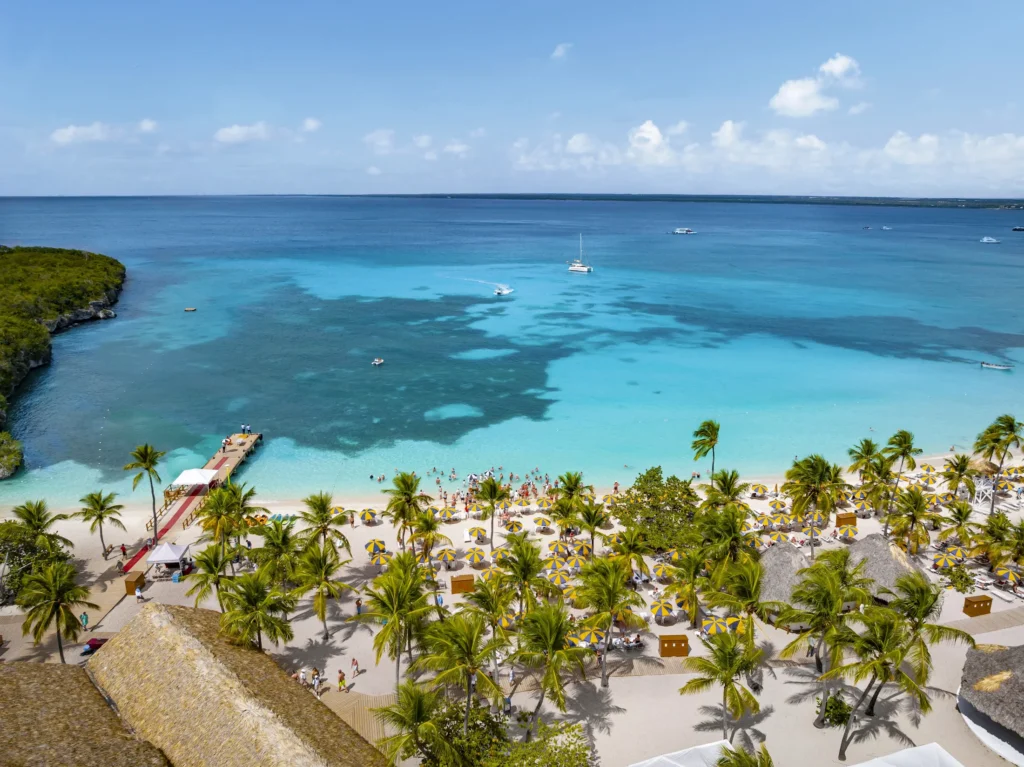
The island is recognized as a Natural Monument in the Dominican Republic and is known for its white-sand beaches, coral reefs and clear water. MSC’s plans are intended to improve the guest experience without replacing the natural setting with a heavily developed resort. The company says the work will follow local environmental regulations.
Guests will reach the island by boat rather than walking directly from the cruise ship onto a pier. MSC describes the transfer as a short boat ride from the ship to the beach.
The upgraded destination is expected to include:
- An open-air beach pavilion buffet serving international dishes and Dominican specialties
- A shaded outdoor dining area overlooking the water
- A tropical palapa-style bar
- A dedicated water sports center with rental equipment
- Cabanas and daybeds available to rent
- Improved changing rooms, showers and restrooms
MSC has not yet confirmed whether meals at Catalina Sugar Beach will be included in the cruise fare, whether beverage packages will work on the island or how much cabanas and water sports rentals will cost.
Which MSC Cruises Itineraries Will Visit Catalina Sugar Beach?
Catalina Sugar Beach is tied primarily to MSC Opera’s year-round cruises from La Romana, Dominican Republic.
MSC Opera begins its La Romana program on November 16, 2026. The ship will offer weekly seven-night Southern Caribbean cruises, with passengers able to combine two consecutive itineraries into a 14-night “butterfly” cruise. Beginning in April 2027, Fort-de-France in Martinique will also be available as a secondary embarkation port on some sailings.
Published MSC Opera schedules generally place Catalina Island immediately after the ship leaves La Romana. On many sailings, the ship departs La Romana late in the evening and spends the following day at Catalina Island.
The remainder of the itinerary varies by sailing date. Currently published routes may include combinations of:
- Virgin Gorda or Tortola in the British Virgin Islands
- Philipsburg, St. Maarten
- Fort-de-France, Martinique
- St. John’s, Antigua
- Bridgetown, Barbados
- Pointe-à-Pitre, Guadeloupe
- Aruba, Curaçao and Bonaire
- Grenada, St. Kitts and other Southern Caribbean destinations
For example, one seven-night itinerary visits La Romana, Catalina Island, Virgin Gorda, St. Maarten, Martinique and Antigua. Another combines Catalina Island with Barbados, Martinique, Guadeloupe and Tortola.
The exact ports change throughout the season, but Catalina Island appears to be a recurring centerpiece of MSC Opera’s La Romana program rather than an occasional stop.
Passengers booking a 14-night butterfly cruise may even visit Catalina Island twice, once during each seven-night portion of the trip. Published 2027 schedules show some 14-night cruises stopping at Catalina Island on both the second and ninth days.
Interested in an MSC Opera cruise? Find a Cruise through MSCCruiseFan.
Will Cruises From Miami Visit Catalina Sugar Beach?
MSC Cruises has not announced Catalina Sugar Beach as a destination for its Miami-based ships.
That means passengers sailing from Miami aboard ships such as MSC World America should not assume their cruise will include the new destination. Miami itineraries will continue to focus on Eastern and Western Caribbean ports such as Puerto Plata, San Juan, Cozumel, Costa Maya, Roatán and Ocean Cay MSC Marine Reserve.
Catalina Sugar Beach is not a replacement for Ocean Cay, nor does it appear to be planned as a destination that will be added across MSC’s entire Caribbean fleet.
Will Cruises From Port Canaveral Visit Catalina Sugar Beach?
MSC has also not announced visits to Catalina Sugar Beach from Port Canaveral.
Current Port Canaveral cruises aboard MSC Seashore focus primarily on The Bahamas, Ocean Cay and Western Caribbean destinations including Cozumel and Costa Maya. MSC World Atlantic is also scheduled to offer Eastern and Western Caribbean cruises from Port Canaveral beginning in 2027, but Catalina Sugar Beach has not been included in those announced itineraries.
Guests booking an MSC cruise from Port Canaveral should therefore not expect to visit Catalina Sugar Beach unless MSC changes its itineraries in the future.
Why Aren’t Florida-Based MSC Cruises Visiting Catalina Sugar Beach?
MSC has not officially explained why cruises from Miami and Port Canaveral are not scheduled to visit Catalina Sugar Beach. However, there are several likely reasons.
The first is geography. Catalina Island is located directly off La Romana, making it an easy first stop for a ship based in the Dominican Republic. It fits naturally into a Southern Caribbean itinerary traveling toward Martinique, Barbados, Antigua or the British Virgin Islands.
A ship leaving Florida would need to travel much farther south. On a typical seven-night cruise, adding Catalina Island could require removing another major destination or spending additional time at sea. Miami and Port Canaveral itineraries are already built around Ocean Cay, The Bahamas and established Eastern or Western Caribbean routes.
The second possible factor is ship size. MSC Opera is a smaller Lirica-class ship, while MSC World America, MSC World Atlantic and MSC Seashore can carry significantly more passengers. Because Catalina Island requires a boat transfer and is being developed as a nature-focused beach destination, it may be easier to manage guest flow from a smaller ship.
That explanation is our assessment based on the location, ship deployments and published itineraries. MSC has not said that larger ships are unable to call at Catalina Island, and future deployments could change.
Is Catalina Sugar Beach Another Ocean Cay?
Catalina Sugar Beach will likely feel similar to Ocean Cay in some ways. Both destinations are centered around swimming, beaches, watersports, food and drinks rather than traditional sightseeing.
However, there are important differences.
Ocean Cay is MSC Cruises’ private island in The Bahamas and is used extensively by ships departing from Florida. Guests can walk directly from the ship onto the island using a full-size pier.
Catalina Sugar Beach is located in the Dominican Republic, requires a boat transfer and will not be exclusively operated for MSC Cruises passengers. The destination will also serve Explora Journeys, other cruise lines and Casa de Campo guests.
It is better to think of Catalina Sugar Beach as an upgraded beach club and nature destination than as a second Ocean Cay.
What Catalina Sugar Beach Means for MSC Cruises
Catalina Sugar Beach gives MSC Opera’s new La Romana cruises a distinctive stop that cannot currently be found on the company’s Florida-based itineraries.
It also strengthens the case for flying directly to the Dominican Republic for an MSC cruise. Instead of spending the first several days sailing south from Florida, passengers can begin in La Romana and quickly reach destinations deeper in the Southern Caribbean.
For travelers who enjoy Ocean Cay, Catalina Sugar Beach could offer a similar relaxing beach day with a more distinctly Dominican character. The new buffet, palapa bar, cabanas and water activities should make the island more comfortable without losing the clear water and natural surroundings that made Catalina Island attractive in the first place.
For now, though, access will depend heavily on where your cruise begins. Passengers sailing on MSC Opera’s La Romana and select Fort-de-France itineraries can look forward to Catalina Sugar Beach. Those departing from Miami or Port Canaveral will continue visiting MSC’s existing Caribbean destinations instead.
