

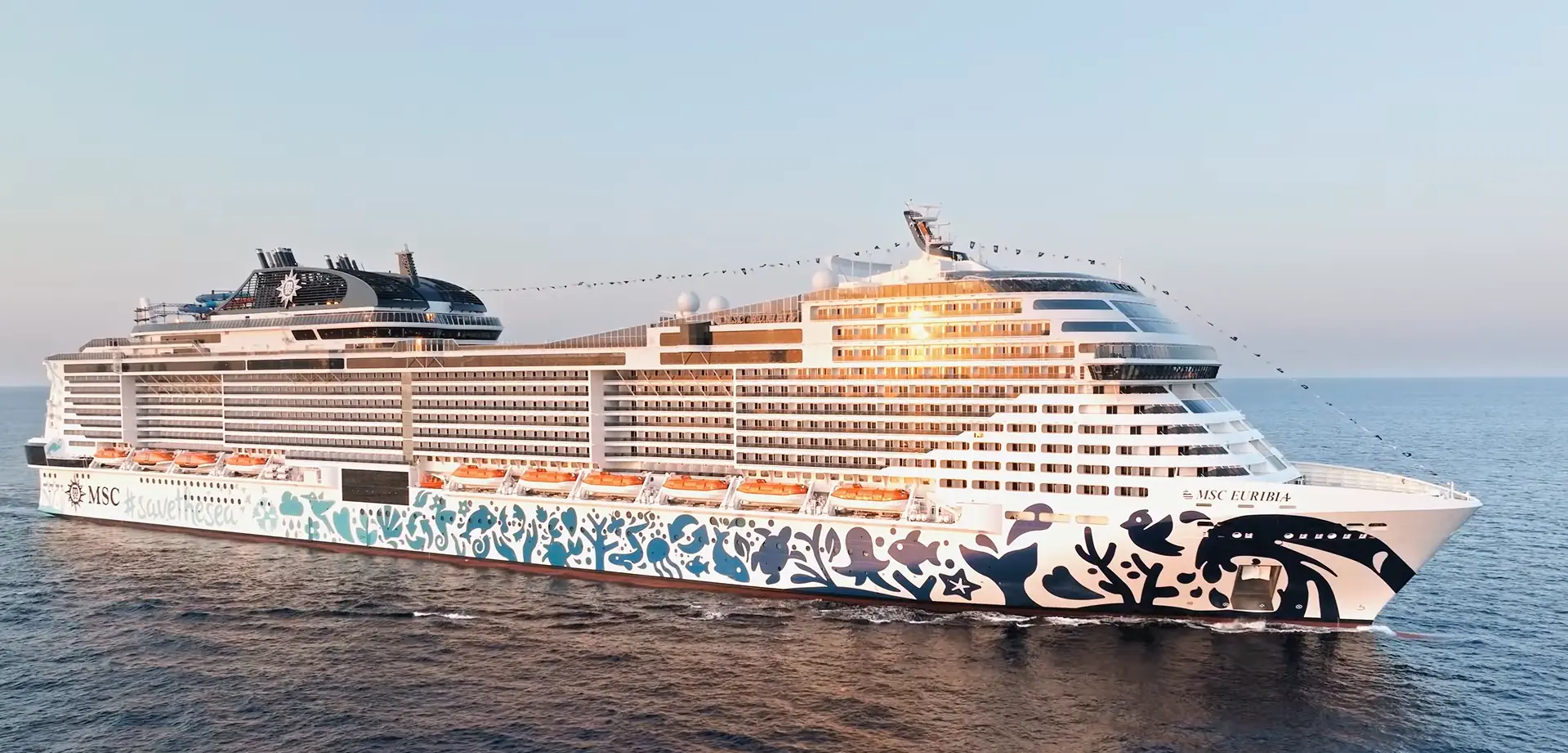
The disruption surrounding MSC Euribia is still not over.
As of April 9, 2026, the ship remains delayed in the Gulf region as ongoing security concerns and tight shipping restrictions in the Strait of Hormuz continue to complicate any safe repositioning toward Europe. Even with a recent U.S.-Iran ceasefire announcement, commercial traffic through the strait is still running at well below normal levels, with Reuters reporting that just seven ships had passed in the prior 24 hours compared to roughly 140 normally.
That helps explain why MSC is still taking a cautious approach.
Cruise ships are not cargo vessels that can simply gamble on a rapidly shifting regional situation. According to current reporting, MSC Euribia has been docked in Dubai since late February or early March, after the conflict escalated and regional operations were disrupted. MSC had already canceled the remainder of the ship’s Arabian Gulf season earlier in the crisis, and now the delay has stretched long enough to impact the ship’s planned return to Northern Europe.
What’s changing now?
The latest confirmed cancellation is the ship’s first Europe sailing of the season, which had been scheduled to depart May 2, 2026, from Kiel, with embarkation also planned for May 3 in Copenhagen. That seven-night cruise was supposed to head to the Norwegian Fjords, including calls in Flam, Hellesylt, and Alesund. MSC said the ship is still not able to leave the region, which means it will not be in position to operate that departure as planned.
So while this is not the start of the Euribia disruption story, it is the latest chapter.
Back in early March, MSC was already dealing with a much more immediate operational mess, with guests stranded in Dubai as airspace closures and the broader regional conflict upended normal travel patterns. The line organized a significant repatriation effort, arranging flights for more than 1,500 guests, using a mix of charter services, commercial airline partnerships, and some government-organized departures. Guests were flown to destinations including the UK, Italy, Germany, Spain, the U.S., and Brazil.
MSC seems to be doing the right thing for affected guests
None of this makes the situation any less frustrating for passengers.
If you booked Euribia expecting a spring Norwegian Fjords cruise, this is a major disappointment. Travel planning takes time, airfare may already be booked, and people often shape family schedules around a cruise date months in advance. That part is real, and it is fair for guests to feel upset about it.
At the same time, based on the reporting available right now, MSC appears to be handling the customer side of this better than many cruisers might expect.
According to Cruise Industry News, affected guests are being offered three options: move to another available sailing departing by November 30, 2026 without a modification fee, move to a sailing departing after December 1, 2026 without a change fee but using the new cruise fare, or cancel for a full refund. For same-duration, same-accommodation rebookings within the earlier window, MSC also said it would guarantee the more favorable fare comparison between the original booking and the new one. The same report says guests may also receive up to €200 per person in non-refundable onboard credit.
There is also some passenger chatter online that lines up with that reporting. A Reddit post shared what appears to be an email snippet about the canceled May 2 sailing, and one commenter described successfully moving to a more expensive replacement cruise without paying the difference, while also receiving onboard credit and quick excursion refunds. That is still anecdotal and not an official MSC statement, but it broadly matches the terms reported by trade coverage.
Why Euribia is stuck in the first place
The simplest explanation is that MSC does not want to move a $1 billion cruise ship through a region where conditions can change faster than a published itinerary.
Reuters reported on April 9 that traffic through the Strait of Hormuz remained at less than 10% of normal volumes, with Iran directing vessels through specific waters near Larak Island and warning ships to follow Iranian instructions. Risk analysts also told Reuters that even a two-week ceasefire would not be enough to clear the shipping backlog quickly. In other words, this is not just a headline problem – it is an operational and safety problem.
That is why I would frame MSC’s decision here as an abundance of caution, not corporate overreaction. The line clearly wants Euribia back in Europe, but it also has every reason to avoid forcing a risky repositioning through a still-unstable corridor. MSC itself has said it is focused on returning the ship to Northern Europe as soon as possible, but there is no public timeline yet for when that can safely happen.
What affected guests should do now
If you are booked on MSC Euribia in the coming weeks, now is the time to stay close to your email and keep an eye on any booking updates. Guests on the canceled departure are being contacted directly, and MSC says affected passengers have the option to rebook or take a refund.
If you booked through a travel advisor, start there first. If you booked direct, MSC’s U.S. customer service page says its team can help guests make or change a booking and provide assistance before or after the cruise. MSC’s U.S. FAQ also directs guests to its official customer service line for booking-related help.
Looking ahead
This is a tough situation all around. Guests are disappointed, travel advisors are stuck helping people rework plans, and MSC is trying to manage a ship that is effectively caught on the wrong side of a geopolitical crisis.
Still, if there is one encouraging takeaway here, it is this: MSC appears to be treating affected cruisers fairly. The line is not pretending the disruption is minor, and it is not leaving passengers with a take-it-or-leave-it answer. Between the refund option, flexible rebooking, fare protection on certain sailings, and onboard credit, MSC seems to understand that how it handles the fallout matters almost as much as the cancellation itself.
For now, the wait continues – both for MSC Euribia and for the guests hoping the ship’s Europe season can get back on track soon.
