

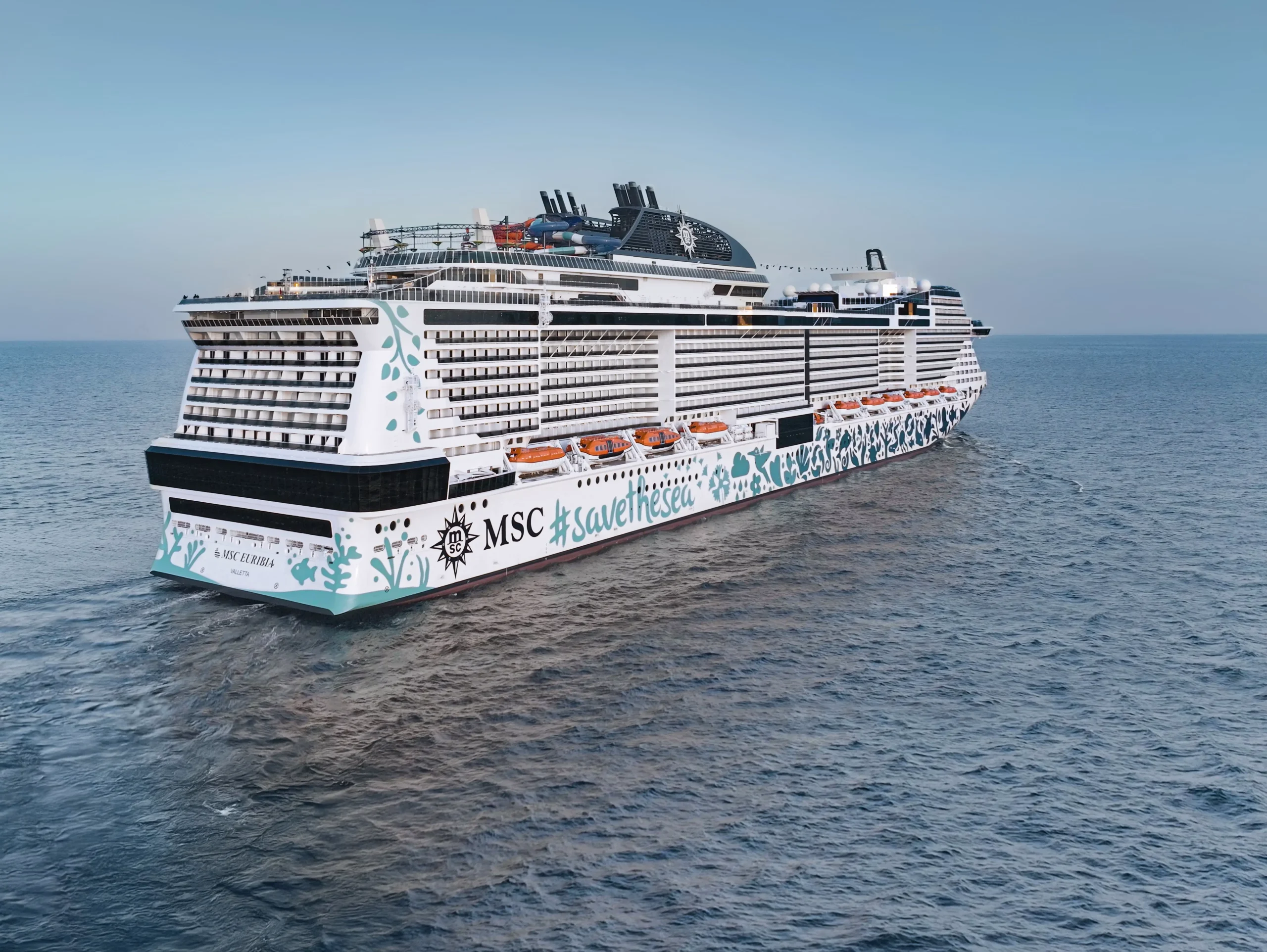
MSC Cruises has reached a cruise industry first, earning independent verification and flag state recognition for actual methane emissions from two of its LNG-powered ships.
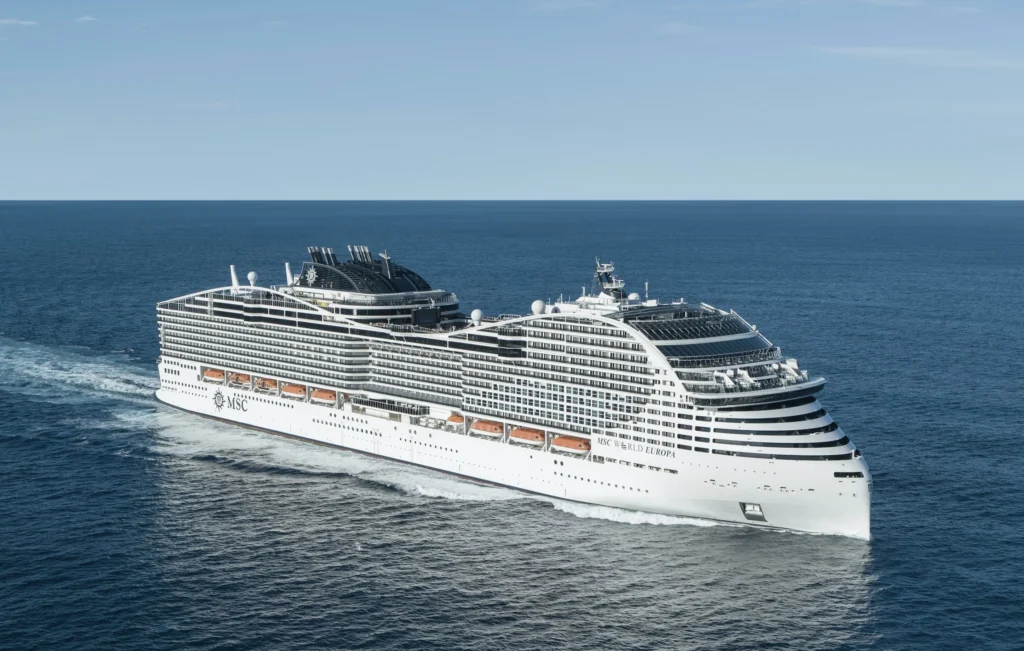
The recognition applies to MSC World Europa and MSC Euribia, two of MSC’s newest and most environmentally advanced ships. According to MSC Cruises, the certification was completed in collaboration with Bureau Veritas Marine & Offshore and allows the cruise line to report actual methane emissions under the FuelEU Maritime framework instead of relying only on default regulatory assumptions.
That may sound like something designed to make everyone’s eyes glaze over during a compliance meeting, but it is actually a meaningful step in how cruise ships measure, verify, and report emissions. In simple terms: MSC is saying, “Don’t just use the industry default number. Measure what our ships are actually doing.” And for MSC, the actual numbers came in well below the default assumption used under FuelEU Maritime.
What Was Verified?
The independent verification covered methane emissions, specifically methane slip, from the dual-fuel LNG engines on MSC World Europa and MSC Euribia.
Methane slip refers to small amounts of unburned methane that can escape during the combustion process when LNG is used as fuel. LNG is often viewed as a cleaner-burning fuel compared with traditional marine fuels because it can reduce certain emissions, but methane slip remains one of the biggest environmental criticisms of LNG-powered ships.
That is why measuring actual methane emissions matters.
Under the FuelEU Maritime framework, ships can be assigned default methane slip values. MSC says the default value prescribed in FuelEU Maritime Annex II is 3.1% for the relevant engine type. After verification, MSC World Europa recorded an actual methane slip value of 1.67%, while MSC Euribia recorded 1.48%. Both figures are significantly below the 3.1% default value.
For cruisers, this does not change the onboard experience. Your buffet line will still be your buffet line. Your cabin steward will not suddenly hand you a methane emissions spreadsheet with your towel animals.
But from an industry standpoint, this matters because it gives MSC a way to use ship-specific, independently verified emissions data instead of broad assumptions.
Why This Matters
The cruise industry is under growing pressure to reduce greenhouse gas emissions, especially in Europe where regulations are becoming more detailed and more demanding.
FuelEU Maritime is part of the European Union’s effort to reduce the greenhouse gas intensity of energy used by ships. The framework applies to ships calling at EU ports and includes emissions such as carbon dioxide, methane, and nitrous oxide. The regulation is designed to push shipping toward lower-carbon fuels and more accurate emissions reporting.
For LNG-powered ships, methane slip is one of the key issues regulators and environmental groups are watching closely. Methane is a powerful greenhouse gas, so even relatively small differences in actual emissions can matter when calculating a ship’s overall climate impact.
That is where this verification becomes important. Instead of MSC being judged only by a default number, these ships now have verified operating data that can be used for compliance reporting.
MSC says the process included engine-specific methane emissions files, a dedicated methane record book, defined engine load monitoring procedures, and onboard exhaust gas measurements using multiple devices to support accuracy.
Translation: this was not a marketing estimate. It was a formal measurement and verification process.
MSC World Europa and MSC Euribia Lead the Way
The two ships included in this recognition are notable.
MSC World Europa was MSC’s first World Class ship and helped introduce the line’s newest generation of large LNG-powered vessels. MSC Euribia, part of the Meraviglia-Plus class, has also been positioned heavily around MSC’s sustainability efforts.
Both ships are powered by dual-fuel LNG engines, which can operate using liquefied natural gas. LNG is not a final solution for the cruise industry’s environmental challenges, and MSC acknowledges that no single technology solves the decarbonization puzzle. But LNG has been used by several cruise lines as a transitional fuel while the industry works toward future options such as renewable fuels, biofuels, synthetic fuels, and other lower-emission technologies.
That is the bigger picture here. This certification is not MSC saying the job is done. It is MSC saying it has a more accurate way to measure one of the most scrutinized parts of LNG performance.
And in an industry where environmental claims are often met with a healthy dose of skepticism, independent verification is important.
What Bureau Veritas Did
Bureau Veritas Marine & Offshore reviewed MSC’s onboard engine methane documentation and validated the company’s monitoring, reporting, and FuelEU plans, including how methane slip was calculated.
After that review, a Statement of Compliance was issued, formally recognizing the verified results and supporting alignment with both EU ETS and FuelEU Maritime requirements.
This is the part that makes the announcement more than just a nice plaque for the corporate office wall. It creates a regulatory pathway that other cruise operators may be able to follow.
If a cruise line can measure and verify actual emissions, and those figures are accepted for compliance purposes, then regulators and operators can work from more accurate data.
That matters not only for MSC, but for the broader cruise industry as more ships are built with LNG or other alternative-fuel capabilities.
What MSC Is Saying
Michele Francioni, Chief Energy Transition Officer of MSC Cruises, described the certification as an important step in improving how methane emissions are measured and reported. He said replacing default assumptions with independently verified data based on real-world ship performance strengthens the accuracy and credibility of emissions reporting under FuelEU Maritime.
Bureau Veritas also highlighted the importance of using verified operational data to improve transparency and support more effective compliance strategies.
In plain English, both MSC and Bureau Veritas are saying the same thing: actual ship data is better than a generic assumption.
And honestly, that makes sense.
If you were comparing gas mileage on two cars, you would rather know how they actually performed on the road than rely only on a default number from a chart. Cruise ships are far more complicated, obviously, but the basic idea is similar.
Does This Mean MSC Ships Are “Green”?
Not exactly.
This is where we need to be careful. This recognition does not mean MSC ships have zero emissions. It does not mean LNG is perfect. It does not mean the environmental debate around cruising magically disappears.
What it does mean is that MSC has achieved a cruise industry first in independently verifying actual methane emissions from these ships for regulatory purposes. That is a real milestone, especially as the industry tries to move away from estimates and toward more transparent, measured performance.
MSC has also said it continues to evaluate fuels and technologies as part of its long-term energy transition strategy, including advanced technologies, operational improvements, and renewable fuels. The company has tied these efforts to the broader maritime goal of reaching net-zero greenhouse gas emissions by 2050.
So the fair takeaway is this: MSC is not claiming the finish line. It is showing progress on one specific, important measurement issue.
Why Cruisers Should Care
For most passengers, this announcement will not affect where they eat dinner, how much they pay for a drink package, or whether they can find a lounger on the pool deck at 10 a.m.
But it does matter in a broader sense.
Cruising is growing, and MSC is one of the fastest-growing cruise lines in the world. As more ships enter service and more ports look closely at environmental impact, cruise lines will need to show real progress with measurable data.
For MSC fans, this gives the line another talking point in its push to position itself as a major global cruise brand with newer ships, modern technology, and a growing presence in North America.
It also matters for future ship design. If MSC can demonstrate that its LNG-powered ships are performing better than default regulatory assumptions, that data could influence future engine choices, fuel strategies, and compliance planning.
Again, not exactly the type of thing you hear discussed at the sailaway party. But behind the scenes, this is the kind of progress that shapes where the cruise industry is heading.
Looking Ahead
MSC’s verification of actual methane emissions on MSC World Europa and MSC Euribia is a technical story, but it is also a meaningful one.
The cruise industry is being asked to clean up, measure more accurately, and prove progress with real data. MSC becoming the first cruise line to receive this type of independent verification and flag state recognition is a step in that direction.
It also gives MSC a stronger foundation as it continues investing in new ships, alternative fuels, and operational improvements.
For guests, the immediate takeaway is simple: MSC is continuing to invest in newer, more efficient ships and is now backing part of its emissions story with independently verified data.
That may not be as exciting as a new water park, a new restaurant, or a new private island upgrade.
But for the long-term future of cruising, it matters.
Bottom Line
MSC Cruises has become the first cruise line to receive independent verification and flag state recognition of actual methane emissions for FuelEU Maritime compliance. The recognition applies to MSC World Europa and MSC Euribia, both of which recorded methane slip values well below the default value used under the regulation.
This does not make LNG perfect, and it does not solve every environmental challenge facing the cruise industry. But it is a meaningful step toward more accurate emissions reporting, better transparency, and real-world measurement instead of relying only on default assumptions.
For MSC, it is another sign that the cruise line wants to be seen not just as a growing global brand, but as one trying to take a more data-driven approach to the future of cruising.
