

MSC Group’s Cruise Division has released its 2025 Sustainability Report, and the headline is pretty clear: MSC says its cruise business is making steady progress on its long-term energy transition plan while also putting more structure around community engagement, biodiversity, and workforce development.
The report covers both MSC Cruises and Explora Journeys, giving a broader look at how MSC Group’s cruise brands are trying to grow while also reducing their environmental footprint. For cruisers, this is one of those behind-the-scenes updates that may not change what drink you order by the pool tomorrow, but it does say a lot about where the cruise line is heading over the next decade.
And in MSC’s case, the direction is increasingly focused on newer ships, alternative fuels, shore power, destination stewardship, and marine conservation.
MSC Says It Reached an IMO 2030 Target Five Years Early
One of the biggest takeaways from the 2025 Sustainability Report is that MSC Group’s Cruise Division says it has achieved the International Maritime Organization’s 2030 carbon intensity reduction target five years ahead of schedule.
That is a notable milestone because cruise lines are under increasing pressure to reduce emissions while still operating very large ships across global itineraries. MSC says its progress is tied to continued fleet modernization, operational improvements, and its broader Energy Transition Plan.
The company says MSC Cruises and Explora Journeys remain on track toward the goal of reaching net-zero greenhouse gas emissions for marine operations by 2050.
That 2050 target is a long way off, of course, and the cruise industry still has a massive amount of work to do. But this report gives MSC a chance to show that its sustainability strategy is not just a future promise. The company is pointing to measurable progress now.
Related: MSC Gets Certification for Methane Gas Emissions
Renewable Fuels and Shore Power Play a Bigger Role
MSC also reported that its cruise division used more than 9,800 tons of renewable fuels in 2025. According to the company, that resulted in an emissions reduction of 48,714 tons of CO2e.
That number will probably not mean much to the average cruiser trying to decide between a balcony and an interior cabin, but it does matter in the bigger picture. Alternative and renewable fuels are expected to be a major part of the cruise industry’s path toward lower emissions, especially as newer ships are designed with more flexible fuel technology.
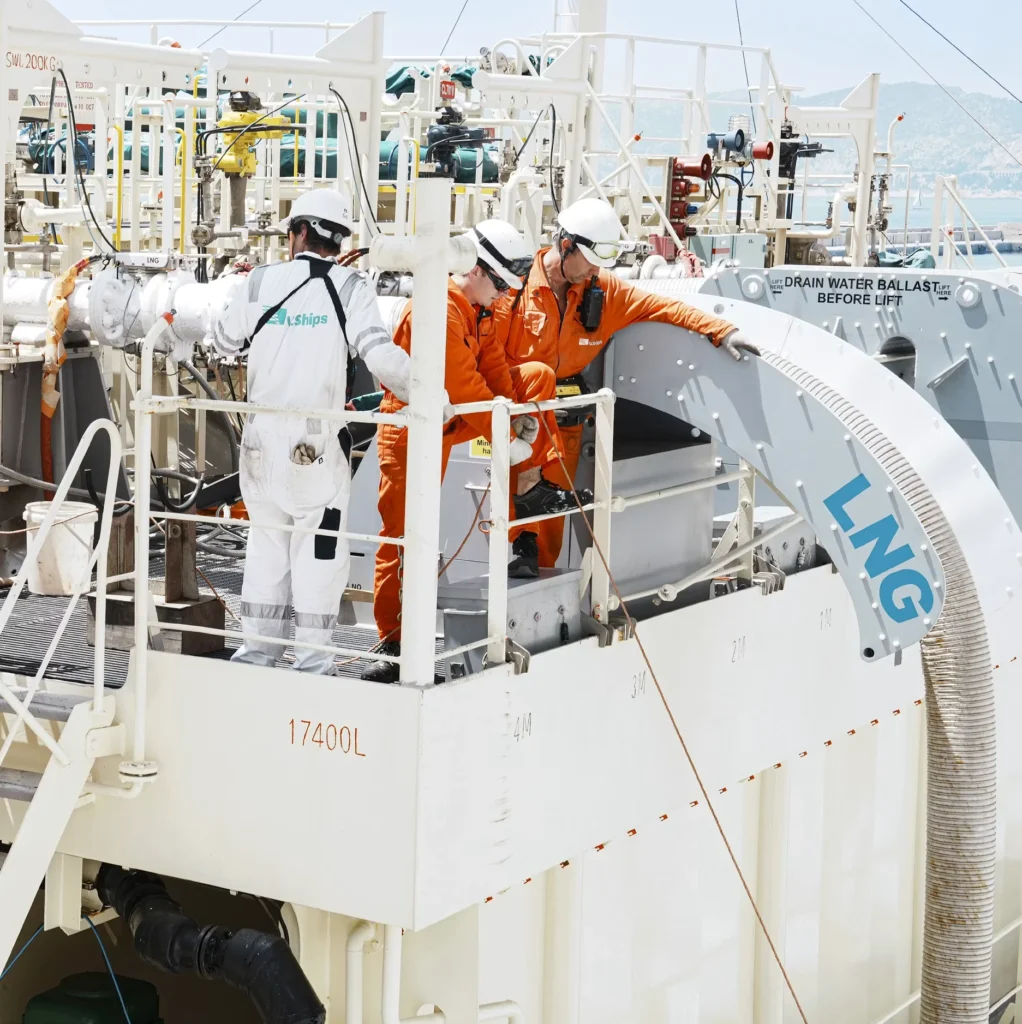
MSC World America, which entered service in 2025, is MSC’s third LNG-powered ship equipped with dual-fuel engine technology. MSC says all future newbuilds across MSC Cruises and Explora Journeys will include this capability.
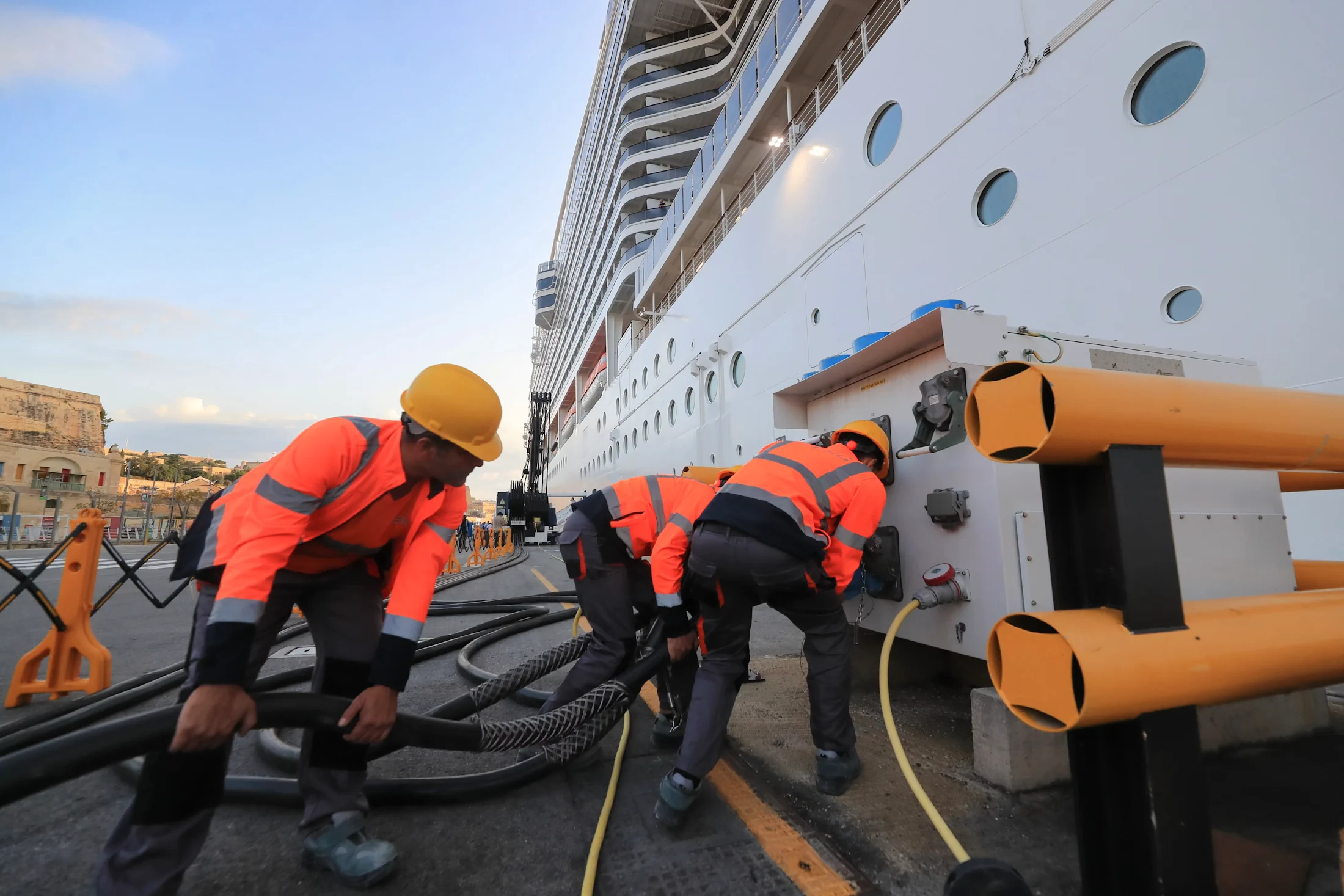
Shore power was another major focus. MSC reported 217 successful shore power connections across the fleet in 2025. When ships can plug into local electrical grids while docked, they can reduce emissions at berth instead of relying on onboard engines while in port.
This is one of those improvements guests may never notice during their cruise, but ports and surrounding communities absolutely do. For cities that host cruise ships regularly, emissions at berth are a major issue, so shore power availability can be an important step forward.
New Terminals in Miami and Barcelona
MSC also pointed to investment in ports and destinations, including the opening of two new terminals in 2025: one in Barcelona and one in Miami.
For U.S. cruisers, the Miami terminal is especially relevant. MSC has been growing its North American footprint, and Miami remains one of the most important cruise ports in the world. A newer terminal can help improve the boarding experience, but MSC also says environmental considerations were built into the development process from the beginning.
That is a good reminder that sustainability in cruising is not only about the ships themselves. It also involves terminals, ports, logistics, supplies, waste handling, and the destinations that cruise lines visit.
Ocean Cay Remains Part of MSC’s Sustainability Story
Ocean Cay MSC Marine Reserve also gets attention in the report, and that makes sense. MSC has made Ocean Cay a central part of its sustainability and conservation story for years.
In 2025, MSC says a marine conservation facility was completed at Ocean Cay. The island is also designated as a Hope Spot by Mission Blue, a nonprofit organization that identifies places considered important to ocean health.
For guests, Ocean Cay is often thought of as a beach day, and honestly, that is fair. It is beautiful, relaxing, and one of MSC’s biggest advantages in the Caribbean and Bahamas market.
But the island also serves a larger purpose for MSC. The company has positioned Ocean Cay as a restoration and conservation project, not just a private island destination. The new marine conservation facility appears to continue that direction.
MSC also highlighted a refreshed biodiversity strategy, including whale strike mitigation measures, route adjustments in sensitive areas, and enhanced crew training. These are the kinds of operational details that rarely make it into cruise commercials, but they can have a meaningful impact when ships sail through ecologically sensitive areas.
Community Engagement Gets More Structure
Another important piece of the report is MSC’s increased focus on communities and destinations.
MSC said it adopted a more structured approach to community engagement in 2025, including direct dialogue with local communities, educational outreach, ship visits for local stakeholders, and closer collaboration with ports, authorities, and partners.
This is becoming more important across the cruise industry. As cruising continues to grow, some destinations are becoming more vocal about overtourism, port congestion, and the balance between economic benefit and quality of life for residents.
MSC’s report suggests the company is trying to get ahead of that conversation by strengthening relationships with the communities it visits.
One example mentioned in the report is the “All Aboard!” youth education initiative in Spain and Portugal, developed with industry body CLIA. MSC says the program reached nearly 200 schoolchildren.
That may sound small compared with the scale of a global cruise company, but it is an example of the type of community-facing program cruise lines are likely to talk about more often as destination stewardship becomes a bigger part of the industry conversation.
Freshwater Production and Resource Management
MSC also reported that 84.4% of freshwater used onboard was produced onboard in 2025.
That is another practical sustainability point that may not be obvious to passengers. Cruise ships use a lot of water, from cabins and laundry to dining venues, pools, kitchens, and crew areas. Producing freshwater onboard can reduce the amount of water that ships need to take from ports and destinations.
For travelers, this is the kind of operational improvement that quietly supports the cruise experience without becoming a guest-facing feature. Nobody is booking a cruise because the ship produces most of its freshwater onboard. But when you zoom out, it is part of the bigger resource-management picture.
MSC Also Highlights Workforce Development
The report is not only about fuel and emissions. MSC also highlighted workforce initiatives, training, and retention.
MSC says crew retention reached 91% in 2025. The company also reported more than 1.7 million hours of training across digital learning, leadership programs, and skills development.
That matters because cruise ships are service-heavy operations. A great cruise experience depends on the crew, from dining staff and room attendants to entertainment teams, officers, guest services, and technical teams most passengers never see.
MSC also launched “Our Best,” described as a cultural transformation program engaging the entire workforce, along with a refreshed Employee Value Proposition designed to help attract, engage, and retain talent globally.
In plain English, MSC is trying to show that sustainability is not just environmental. It also includes people, training, culture, and the long-term ability to support a growing global workforce.
Why This Matters for MSC Cruisers
For most guests, sustainability reports are not exactly pool-deck reading. Nobody is sitting in the Top Sail Lounge saying, “I can’t wait to dig into GHG value-chain mapping after dinner.”
But these reports still matter.
They show where a cruise line is investing, what it sees as future risks, and how it plans to operate in a world where ports, regulators, and travelers are all paying more attention to environmental impact.
For MSC Cruises, the big story is that the company is trying to balance growth with measurable progress. MSC is adding ships, expanding in North America, investing in terminals, and developing destinations like Ocean Cay. At the same time, it is also reporting progress on emissions intensity, renewable fuels, shore power, onboard water production, biodiversity, and workforce retention.
That does not mean the cruise industry has solved sustainability. It has not. Large ships still require enormous amounts of energy, and the transition to cleaner fuels and infrastructure will take years.
But MSC’s 2025 report gives cruisers a clearer look at how the company is approaching that challenge.
Bottom Line
MSC Group’s Cruise Division says its 2025 Sustainability Report shows continued progress across energy transition, emissions reduction, shore power, biodiversity, community engagement, and workforce development.
The biggest headline is MSC’s claim that it achieved the IMO’s 2030 carbon intensity reduction target five years early. The company also reported more than 9,800 tons of renewable fuels used in 2025, 217 shore power connections, a completed marine conservation facility at Ocean Cay, and a 91% crew retention rate.
For MSC fans, this is not the flashiest cruise news of the year. There are no new waterslides, no new specialty restaurant menus, and sadly, no announcement that gelato is now free for everyone. But it is still an important look at how MSC is preparing for the future of cruising.
As MSC continues to grow, especially in the U.S. market, these sustainability efforts will become a bigger part of the story.
