
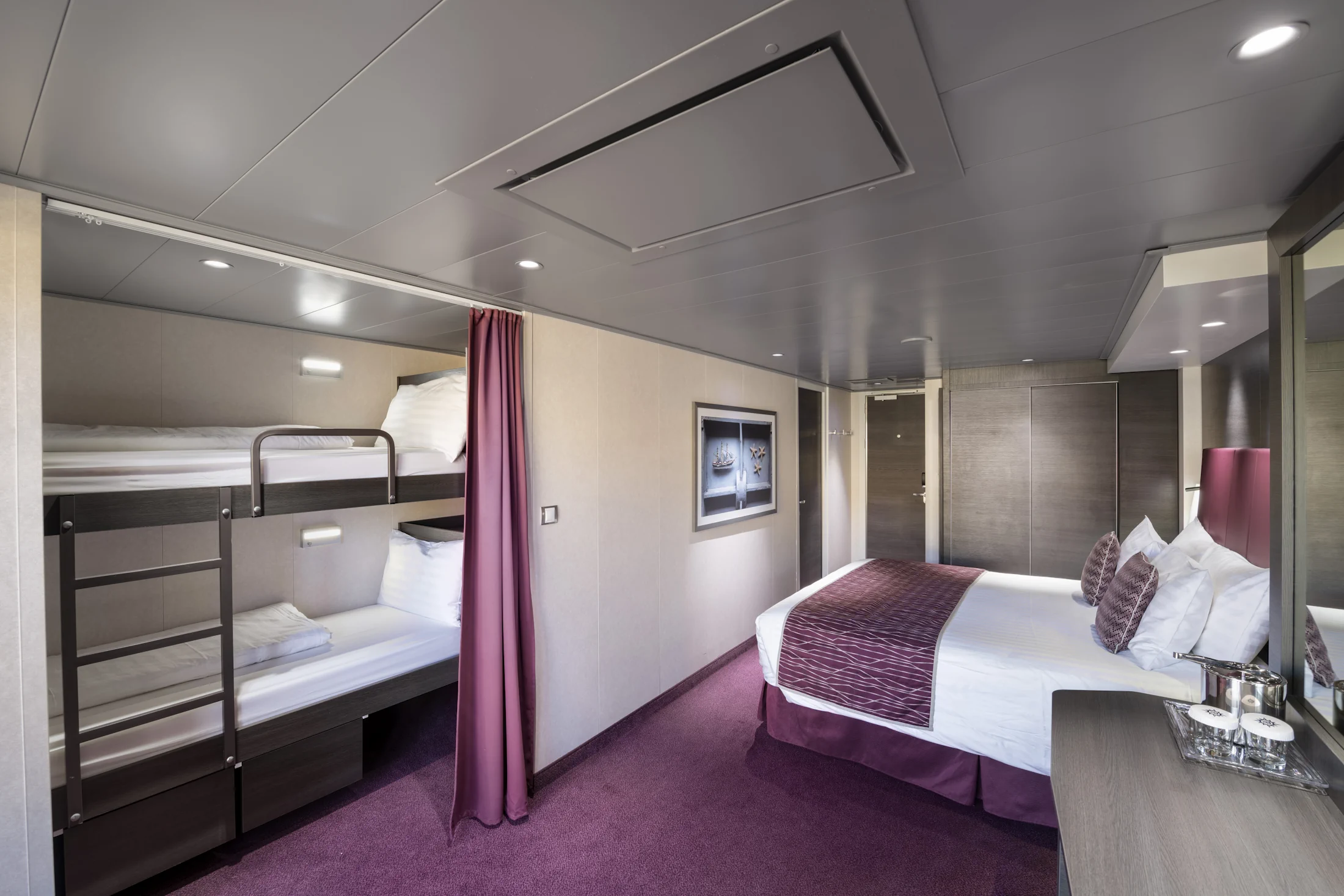
Booking an MSC cabin for three, four, five, or even six people sounds simple enough. Then you start looking at deck plans and realize that “sleeps 4” can mean a lot of different things.
Sometimes that extra sleeping space is a sofa bed. Sometimes it is an upper Pullman that folds down from above. On newer ships, it may be a sofa that transforms into bunks. And sometimes the smartest move is skipping the extra-bed puzzle entirely and booking connecting cabins instead.
This guide is meant to make that whole process easier. It is a fleet-wide overview, but MSC’s exact setup can vary by ship and by cabin number, so always double-check the deck plan and booking details for your specific sailing.
Why This Matters More Than People Think
One of the biggest cabin-booking mistakes on MSC is assuming that a room that sleeps four will feel the same as another room that also sleeps four.
It will not.
MSC uses several different extra-bed setups across the fleet. The deck-plan legends regularly call out sofa beds, double sofa beds, Pullman beds, bunk-bed conversions, connecting cabins, accessible cabins, and cabin-specific exceptions.
That means the real question is not just, “How many does this cabin sleep?”
It is, “How does this cabin sleep them?”
The Main Bed Setup on MSC
As a starting point, most standard MSC cabins use one main bed that can be configured either as one large bed or split into two twins.
If you want a rough mental picture, many cruisers think of these as European-style twins that are approximately 36″ x 78″ each. When pushed together, that creates a king-style setup around 72″ x 78″.
That said, these dimensions are best treated as a starting point, not a perfect fleet-wide rule. Exact sizes can vary a bit by ship and cabin type.
Studio cabins, accessible cabins, and a few specialty categories may also work differently, so this is one area where it pays to read the cabin details closely.
MSC Extra Bed Types Explained
Sofa Bed
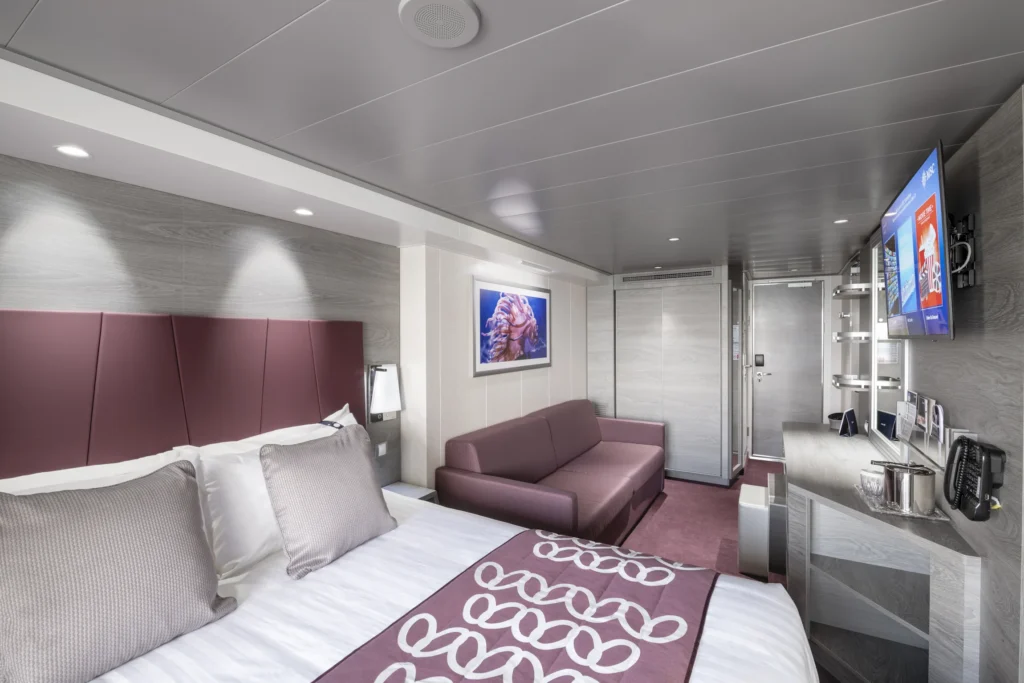
A sofa bed is the easiest extra-bed setup for most people to picture.
During the day, it functions as seating. At night, it converts into a bed for an additional guest.
This is a common setup for a third guest in balcony and ocean view cabins. For families with one child, it is often one of the simplest and least awkward arrangements because the extra bed stays low and does not require climbing.
Double Sofa Bed
A double sofa bed is a sofa that converts to sleep two extra guests instead of one.
This is one of the more useful setups for a family of four, especially if you would rather avoid overhead bunks. Still, not every cabin that sleeps four uses a double sofa bed, so never assume based on occupancy alone.
Two cabins in the same general category can still sleep guests in very different ways.
Pullman Bed
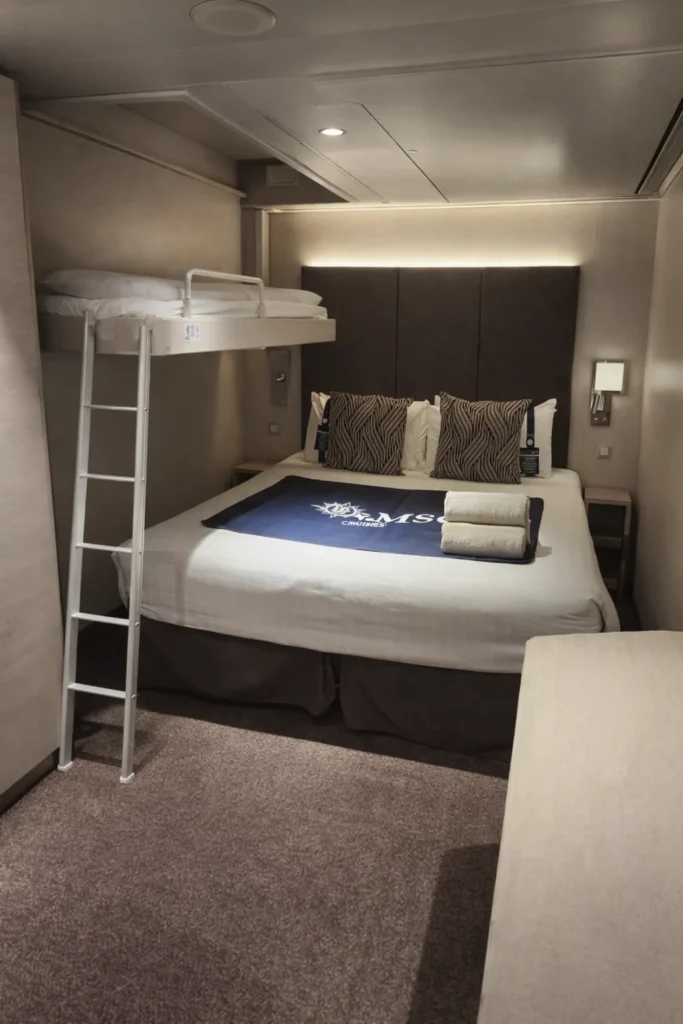
A Pullman bed is an upper berth that folds down, usually from above.
On MSC deck plans, you will often see cabins labeled as having a third bed as a Pullman bed or third and fourth beds as Pullman beds.
This is where things start to feel less like a hotel room and more like a cruise cabin doing gymnastics with limited space.
Pullmans are practical, but they also make the room feel tighter and less open once they are deployed. For kids and teens, they can work very well. For adults, especially if anyone has mobility issues or does not love climbing up and down in the dark, they are more of a “know what you’re signing up for” situation.
Bunk Bed or Sofa That Converts Into Bunk Beds
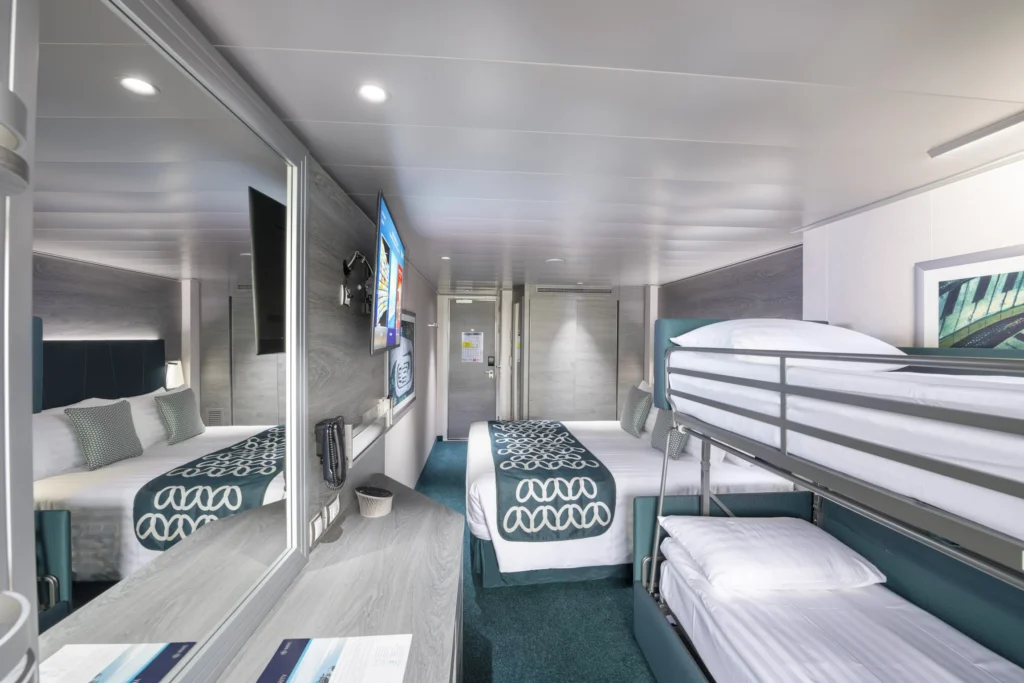
On newer MSC ships, you will sometimes see a dedicated setup for a bunk bed or a sofa that converts into bunk beds for the third and fourth guests.
This is the modern “transformer” setup many cruisers talk about. In plain English, the sofa area can turn into a stacked bunk arrangement, which helps preserve floor space better than some traditional pull-out designs.
You will also sometimes hear this described as a bunk alcove or bunk-style nook on newer ships. It is worth knowing about because it is one of the ways MSC has made some newer family-friendly cabins feel a little more efficient.
How to Spot These Beds on an MSC Deck Plan
The first rule is simple – do not book by cabin category alone.
Yes, category matters. But when extra beds are involved, the deck-plan legend matters more.
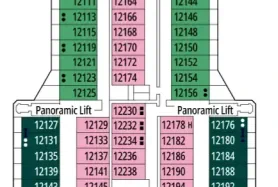
MSC deck plans include symbols that identify cabins with sofa beds, double sofa beds, Pullman configurations, bunk-bed conversions, and connecting cabins. You do not need to memorize every symbol across the fleet. You just need to know they are there and that they matter.
The second rule is even more important – check the actual cabin number.
On some ships, MSC notes that specific cabins have only a sofa bed or only a bunk-bed setup. That means two cabins in the same category may not be equally good for your group.
If sleeping setup matters, do not stop at “balcony” or “interior.” Drill down to the exact stateroom.
Who Can Use These Beds?
The clearest MSC note published on newer ship deck plans is that bunk beds are not suitable for children under age 6.
Beyond that, MSC does not publish one simple fleet-wide comfort chart for every extra-bed setup, so this is where common sense comes in.
Sofa beds are usually easiest for younger kids and for travelers who do not want to climb.
Pullman beds and top bunks tend to work better for older kids, teens, and agile adults.
Anyone with mobility concerns should think carefully before booking an upper berth setup.
And while four adults in one cabin may be technically possible on some ships, “possible” and “comfortable” are not always the same thing.
There is also no easy-to-find official fleet-wide published weight rule for upper berths, but many cruisers report seeing 150 kg / 330 lb limit tags on Pullman beds. That is worth keeping in mind, especially if an upper berth is part of your plan.
What About Cabins for 5 or 6 Guests?
This is where things get very ship-specific.
Some MSC ships have cabin categories that can accommodate a fifth guest. On certain ships and in certain suite categories, some can even sleep six.
That does not mean every higher-occupancy cabin uses the same bed setup. It just means MSC has a range of larger-capacity options across the fleet.
If you are trying to fit five or six people into one stateroom, this is the moment to slow down, study the deck plan, and verify exactly how those guests will be sleeping.
People absolutely want to know about these cabins, but they should also know that this is not one-size-fits-all across MSC.
Accessible and Studio Cabin Exceptions
This is another easy place for people to get tripped up.
Studio cabins, accessible cabins, and certain specialty categories can follow different rules than standard cabins. Some do not offer the same bed-conversion setup as a typical stateroom. Others may not offer third and fourth beds in the same way as surrounding cabins.
So if you are booking a studio cabin or an accessible cabin, assume nothing and verify everything.
It may not be the most glamorous cruise tip ever shared on the internet, but it can save you from a lot of confusion later.
Tips and Tricks for Living With These Bed Setups
If you have an upper berth deployed over the main bed, warn the person sleeping below. Sitting straight up in the morning can become a surprisingly memorable moment.
If kids are using a ladder to reach an upper berth, a small nightlight is a smart idea for middle-of-the-night bathroom trips.
If the sofa or bunks are folded away during the day, use that floor space wisely. Cruise cabins feel much larger when the walkway stays clear.
Also remember that your cabin steward is usually the one handling the evening transformation and morning reset. You do not need to wrestle the furniture yourself.
If you need the extra bed left down during the day for naps or downtime, it is reasonable to ask. Just remember that doing so will make the cabin feel smaller while it is set up.
When Connecting Cabins May Be the Better Answer
Sometimes the best extra-bed strategy is no extra-bed strategy at all.
MSC also offers family-friendly options built around connecting cabins, and for some groups that is the better answer.
If you are traveling with older kids, teens, grandparents, or simply a group that values privacy and bathroom access, connecting cabins may be a much more comfortable solution than squeezing everyone into one stateroom.
Yes, it can cost more. It can also save everybody from spending a week climbing over each other like a mildly stressed-out traveling circus.
Final Thoughts
MSC gives you more than one way to make a cabin sleep three, four, five, or even six guests. That flexibility is great, but it also means you need to look past the occupancy number.
Check the deck-plan symbols. Check the exact cabin number. Pay attention to studio and accessible exceptions. Treat five- and six-person cabins as highly ship-specific.
And if you are looking at a room for four adults, take a deep breath and be honest with yourself before you click “book.”
Because on MSC, “sleeps 4” might mean a roomy family setup.
Or it might mean you and your cabinmates are about to get very, very familiar.