
The MSC cabins to avoid are the ones that clash with how you want to cruise. For a light sleeper, that might mean a room beneath a busy public deck. For someone booking a balcony specifically for an open sea view, it might mean accepting an assignment without checking what the view could be.
There is no useful fleet-wide blacklist of cabin numbers. This is a checklist of warning signs and tradeoffs, not a claim that certain rooms are bad for everyone. A location that works beautifully for a flexible, budget-focused traveler can be the wrong choice for someone who values quiet, a particular view, or a short walk to the elevators.
Start with your non-negotiables, then inspect the exact room and the booking terms. The MSC cruise cabins guide is a useful starting point if you are still choosing the kind of cabin you want.
Check What Is Above, Below, and Beside the Cabin
Do not stop at the deck containing your room. Open the deck above and the deck below, line up the same part of the ship, and look at what surrounds that location. A cabin number tells you where the room sits; the neighboring spaces help you decide whether it suits you.
For quiet, I pay particular attention to cabins directly under public decks. In my experience, overhead noise has been more noticeable in interior cabins in those locations than in outside-facing ocean-view or balcony rooms. That is an experience-based warning, not proof that every interior cabin is noisy or that a balcony eliminates the risk.

Look for pools, open decks, entertainment spaces, and other public areas above or below the room. If your usual bedtime is early, a nearby late-night venue deserves more scrutiny. If you sleep late, an area that gets busy in the morning may matter more. The point is to match the activity around the cabin to your own hours.
I also check for nearby service and crew areas because, in my experience, activity there can be audible outside normal daytime hours. An unlabeled space on a deck plan is a question to ask MSC or your travel advisor, not a reason to invent a noise rating. Guest deck plans do not show every operational detail.
Balance Elevator Convenience With Hallway Traffic
Being near an elevator bank is convenient. Being directly on the elevator or stair lobby is a different tradeoff, particularly if overnight hallway noise bothers you.
My preference is to be near the elevator bank without having the cabin right on the lobby. I do not use a fixed number of cabins or a set distance as a rule. Look at where the cabin door opens and the route people will use to reach the elevators.
A room farther down the corridor may suit you better if quiet is the priority. It may suit you less well if repeated long walks are difficult or you want quick access to the rest of the ship. Do not reject every cabin near an elevator just because of a blanket warning.
Check the View You Are Actually Buying
If a clear sea view is the reason you are paying for an ocean-view or balcony cabin, read the full category description before booking. Do not assume that every room with the same broad label has an identical outlook.
Check for wording such as obstructed view, partial view, or promenade view where applicable. Those descriptions are not interchangeable with the unobstructed ocean view you may have pictured. Look at the exact cabin’s position, the category notes, and any applicable deck-plan symbols rather than relying only on a representative photograph.
MSC’s official deck-plan legend illustrates the kinds of details to watch for, including view obstructions and different balcony railings. The symbols available on your own ship’s plan may differ, so read its legend rather than transferring a symbol from another ship.
A promenade-facing view can also raise different privacy expectations from an open-sea view. Ask what faces the cabin and what you will be looking toward. An obstructed or inward-facing view may be an acceptable saving if you understand it; it is a poor bargain if it defeats the main reason you booked that cabin.
Avoid Bella If Cabin Choice Is a Deal-Breaker
Bella can work for a flexible traveler, but it is a mismatch if you need control over the cabin’s location. MSC’s current U.S. experience comparison says Bella uses assigned cabins and does not let you select a cabin number. Possible assignments can include obstructed, partially obstructed balcony, or promenade views where applicable.
My rule is simple: do not choose Bella unless you are comfortable letting MSC choose your room within the applicable booking terms. If noise, a particular location, or a specific view would make or break the trip, choose a booking option that allows cabin selection. MSC currently lists that choice as a Fantastica benefit, subject to its operational-change terms.
I have booked an ocean-view cabin and been assigned a balcony instead. That was a welcome outcome, but an upgrade is not guaranteed and is not a sound reason to accept a cabin arrangement you would otherwise dislike. Make the decision based on the room and terms you are buying, not an upgrade you hope to receive.
Read the Bed and Connecting-Room Symbols
For a family or group, a cabin’s maximum occupancy is only the beginning. Check how the additional beds are arranged, whether the exact room connects to another cabin, and whether both rooms you need are available.
Read the legend for your ship’s current deck plan. Depending on the room, additional sleeping places may involve a sofa bed, a Pullman bed, or another arrangement. The setup that works for two adults may be less convenient when all the beds are in use.
A connecting-room symbol is useful if you want linked accommodation. It is not proof that the room will be noisy, and it does not establish the soundproofing of the connecting door. If you do not need a connection and are sensitive to sound, ask about that exact layout rather than assuming all connecting cabins should be avoided.
For the broader differences between room categories, use MSC cabin types explained. Keep the final decision tied to the specific room and the people who will sleep in it.
Do Not Trade Essential Access Needs for a Lower Fare
If you need an accessible cabin, do not assume a standard room or a later assignment will provide the features you require. MSC’s accessibility guidance advises requesting accessible accommodation at booking and checking equipment dimensions for the specific ship.
Confirm the exact cabin’s doorway, bathroom arrangement, bed setup, and space for your mobility equipment with MSC or your advisor. A larger-sounding category name is not a substitute for that confirmation. Our accessible MSC cabins guide covers the questions to raise before you commit.
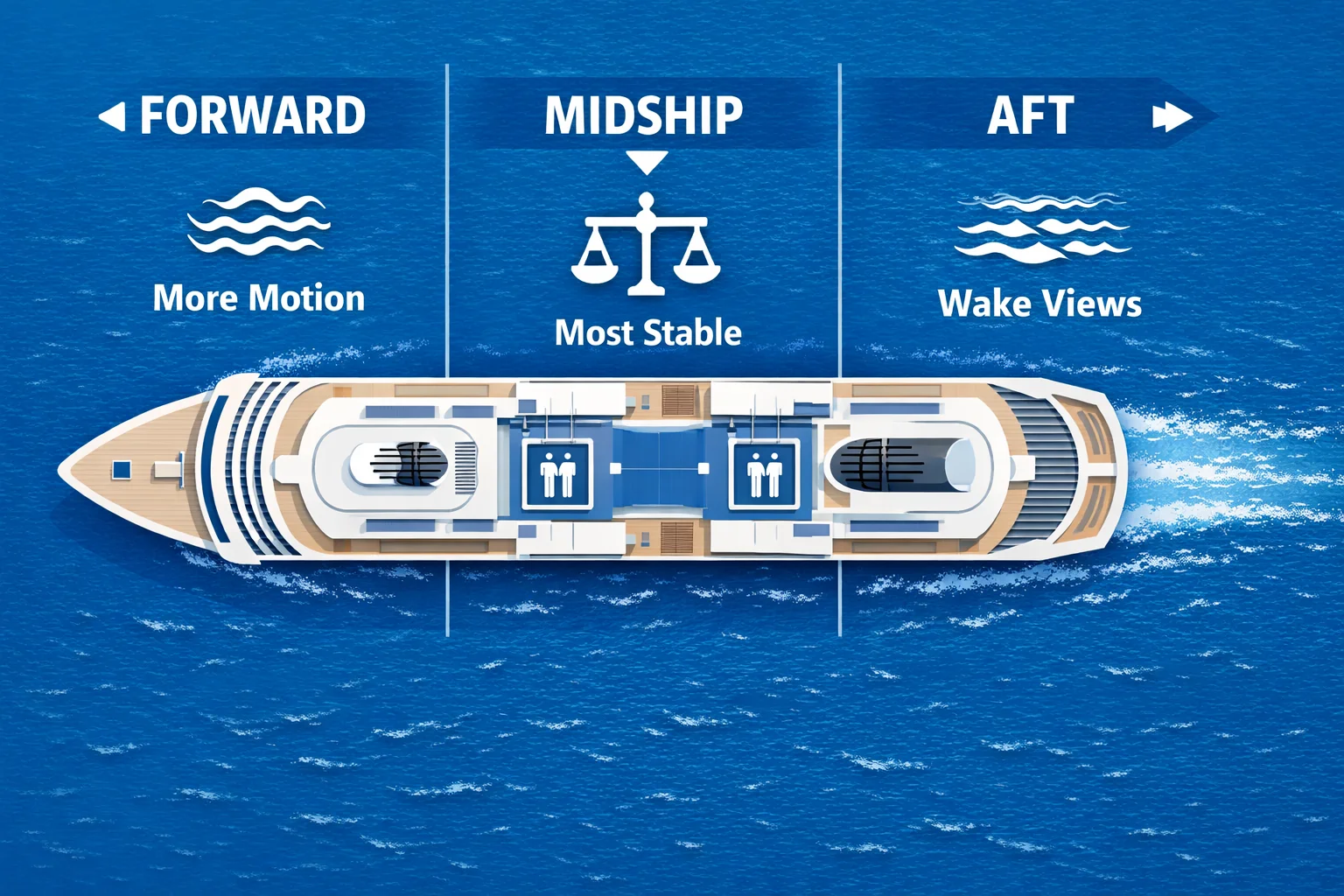
Similarly, if you have a location preference because you are sensitive to motion, assess the room’s position separately from its category or price. No room choice promises a motion-free cruise. The best cabin location guide can help you compare location tradeoffs without turning this checklist into another category guide.
Use the Right Deck Plan and Ask Specific Questions
Use the official plan for the ship you are actually booking, together with the cabin description shown for your sailing. Do not use a sister ship’s room number as proof that your room has the same layout or surroundings.
Check above, below, beside, across the corridor, and outside the window or balcony. Then read the legend and category notes. If anything is unclear, ask a specific question: what is directly above this cabin, what does this view description mean, or what sleeping arrangement does this room use?
Reviews can help you discover questions to ask, but check that they refer to the same ship and cabin. A complaint without a cabin number, or an old plan without current confirmation, should not become a permanent avoid rule.
Your Final MSC Cabin Checklist
Before accepting the fare, make sure you can answer these questions:
- Have I checked the spaces above, below, beside, and across from the cabin?
- Does the nearby activity fit my usual sleeping hours?
- Am I comfortable with the distance to the elevators and the cabin’s position relative to the lobby?
- Do I understand the view description and any relevant deck-plan symbols?
- Does the bed arrangement work for everyone in the room?
- If accessibility features are essential, have I confirmed the exact room meets my requirements?
- If the room is assigned rather than selected, can I genuinely accept the possible location and view tradeoffs?
A discounted cabin is worth considering when the compromise is something you can live with. It is worth avoiding when it compromises the thing you care about most. Choose with that distinction in mind, not because an online list calls an entire category or deck bad.