
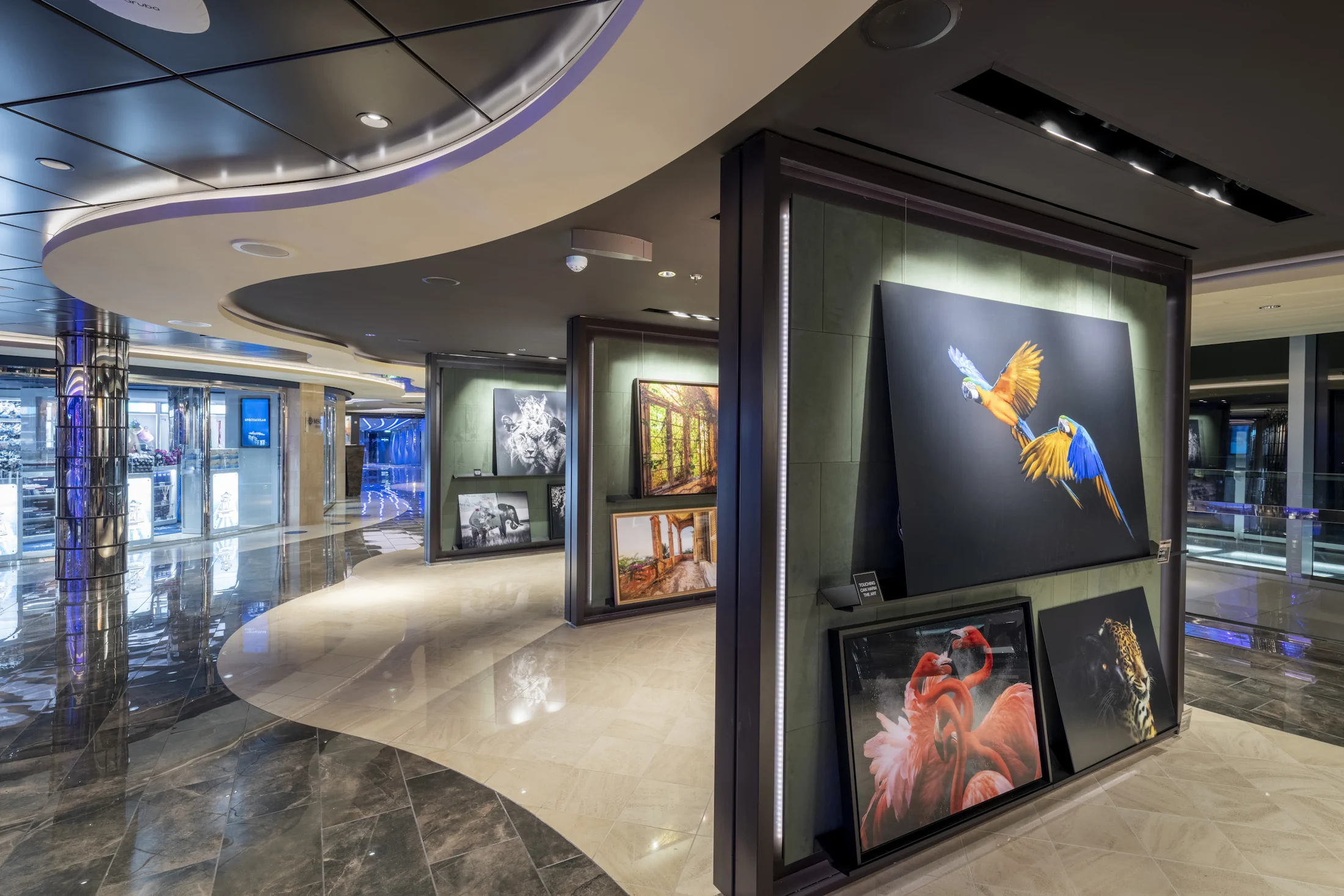
If you’ve ever spotted “Art Auction” in the daily program and thought, “Is this classy culture… or a floating QVC with champagne?” the answer is: a little of both.
MSC’s art auctions can be genuinely fun. You get a lively event, free-to-cheap entertainment, and a chance to see a lot of art fast. But it’s also a sales environment, and the best outcome is when you go in with eyes open, a budget set, and a clear idea of what you’re actually buying.
Let’s break down how it works, what the real costs can be, and how to avoid the classic “vacation brain” purchase you regret on the flight home.
For more info on shopping, check out our Shopping Onboard Guide for MSC Cruises.
Who runs the art auctions on MSC ships?
On many cruise ships, the onboard auction program is run by a third-party art company. The most common name cruisers see is Park West Gallery, which operates cruise ship art auctions and onboard art programs across multiple lines.
Practical takeaway:
- You’re usually not buying “from MSC” directly.
- You’re buying through the onboard art operator, with their paperwork, pricing structure, and policies.
Art auctions vs MSC’s Art Wall and onboard exhibits
MSC also offers onboard art experiences that are not the same as an auction.
- Art auction / gallery program: sales-focused events where you can bid and buy.
- Art Wall / rotating exhibits: more like a curated onboard art feature, typically experienced as you walk the ship.
Why this matters:
- An “art talk” can be educational.
- An “auction” is a buying decision with fees, shipping, and policy fine print.
How MSC art auctions work
1) Preview days and gallery browsing
- The gallery area will display pieces ahead of the auction.
- You’ll usually see scheduled “art introductions,” “champagne art events,” or similar sessions designed to get people comfortable with the process…. and drink a couple glasses of champagne to get the bidding process ready.
2) Auction night basics
- You’ll get a paddle/number and the auctioneer explains bidding.
- Bids rise in increments and the room energy is intentionally high.
- You’ll see bundles, “bonus items,” and occasional giveaways.
You can absolutely attend, enjoy it, and leave without buying anything. That’s allowed. Encouraged, even, if you’re unsure.
What you can buy at the auction
Inventory varies by sailing, but expect a mix of:
- Limited edition prints (often signed/numbered)
- Contemporary works
- Occasionally originals (more expensive, fewer available)
- Specialty formats and branded terms like “seriolithographs” (more on this below)
What to know before you buy
It’s not an investment
Rule #1: Buy art because you love it, not because you think it’s going to fund your retirement.
Reality Check: The “appraised value” you hear in auctions is often geared toward insurance replacement and can be very different from what you’d get selling it on the secondary market.
The hidden math
Your winning bid is rarely your final “all-in” cost.
Common add-ons include:
- Buyer’s premium: Park West has historically used a 15% buyer’s premium in reported cruise auction refund policies.
- Framing (sometimes included, often not)
- Shipping/handling/insurance
- Taxes/duties depending on delivery location
Smart bidder rule: Before you bid, ask for the total delivered price to your home address.
“Original” vs “Print” Terminology
Cruise auctions can move fast, so slow this part down.
Original
- One-of-a-kind work created directly by the artist (oil, acrylic, mixed media, etc.)
- Typically the highest price point and the most “true art collecting” purchase
Lithograph
- Traditionally: printmaking from a stone/plate process
- In modern retail: the term is sometimes used broadly for high-quality prints
- Ask: “Is this an original lithograph process or a reproduction print labeled as lithograph?”
Serigraph
- A silkscreen print (ink pushed through a screen stencil)
- Often richer, more layered color than a simple reproduction
- Limited editions are common
Seriolithograph
- A hybrid term commonly associated with cruise auction retail, described as combining aspects of lithography and serigraphy.
Must-ask question: Is the signature hand-signed, or is it “in the plate” (printed as part of the image)?
The “captive audience” effect is real
Cruise psychology is undefeated:
- “Fun money”
- A ticking clock
- A lively room
- Sometimes complimentary drinks
It can make a $2,000 paddle raise feel like a $20 impulse buy. Your job is to be the adult in the room, even if the auctioneer is very charming.
Quick Tips for the Smart Bidder
Pre-register before your cruise
If you’re serious about attending, Park West promotes online pre-registration that includes a complimentary gift and a $100 art credit for cruise auctions.
Google is your friend
If you see an artist you like, use ship Wi-Fi to do a quick reality check:
- Look at recent sold listings on secondary marketplaces
- Check independent galleries
If the “deal of a lifetime” is actually $500 more than comparable land pricing, put the paddle down.
Ask about “take home” art
Some smaller pieces, posters, or unframed works may be able to leave with you in a tube. That can save real money versus professional packing and shipping.
Payment, paperwork, and delivery
What to confirm before you buy:
- Itemized receipt and full description of the piece
- Certificate of authenticity (if provided) and who issues it
- Edition size and number (if applicable)
- Expected delivery timeline and shipping method
- Damage policy (what happens if it arrives with issues)
Many purchases, especially framed or oversized pieces, are shipped to your home. Shipping and handling terms can vary by purchase and by operator, so get the details in writing.
Returns and “what if I regret this tomorrow?”
Policies vary, and they matter a lot.
A widely reported Park West policy (from cruise industry coverage) has included:
- A refund window (example reported: 40 days) where the refund is the full price minus the buyer’s premium, which was reported as 15%.
Do not assume this applies to every item or every sailing today. The safe move:
- Ask for the return policy in writing before you buy.
- If you don’t like the policy, do not bid.
Smart questions to ask before you bid
- What is the all-in delivered price to my address?
- Does this include framing, shipping, insurance, and buyer’s premium?
- Is the signature hand-signed or printed?
- What is the medium, edition size, and edition number?
- What is the return/refund policy in writing?
- What is the timeline and what happens if it arrives damaged?
Final advice: how to win the night without overspending
Go for the experience first.
- Attend the preview.
- Enjoy the event.
- Set a hard number you won’t cross.
- Bid only if you’d be happy owning the piece even if it has zero resale value.
That’s how you leave the auction feeling like a savvy cruiser, not someone who bought a “conversation starter” they now have to hide from their spouse.