

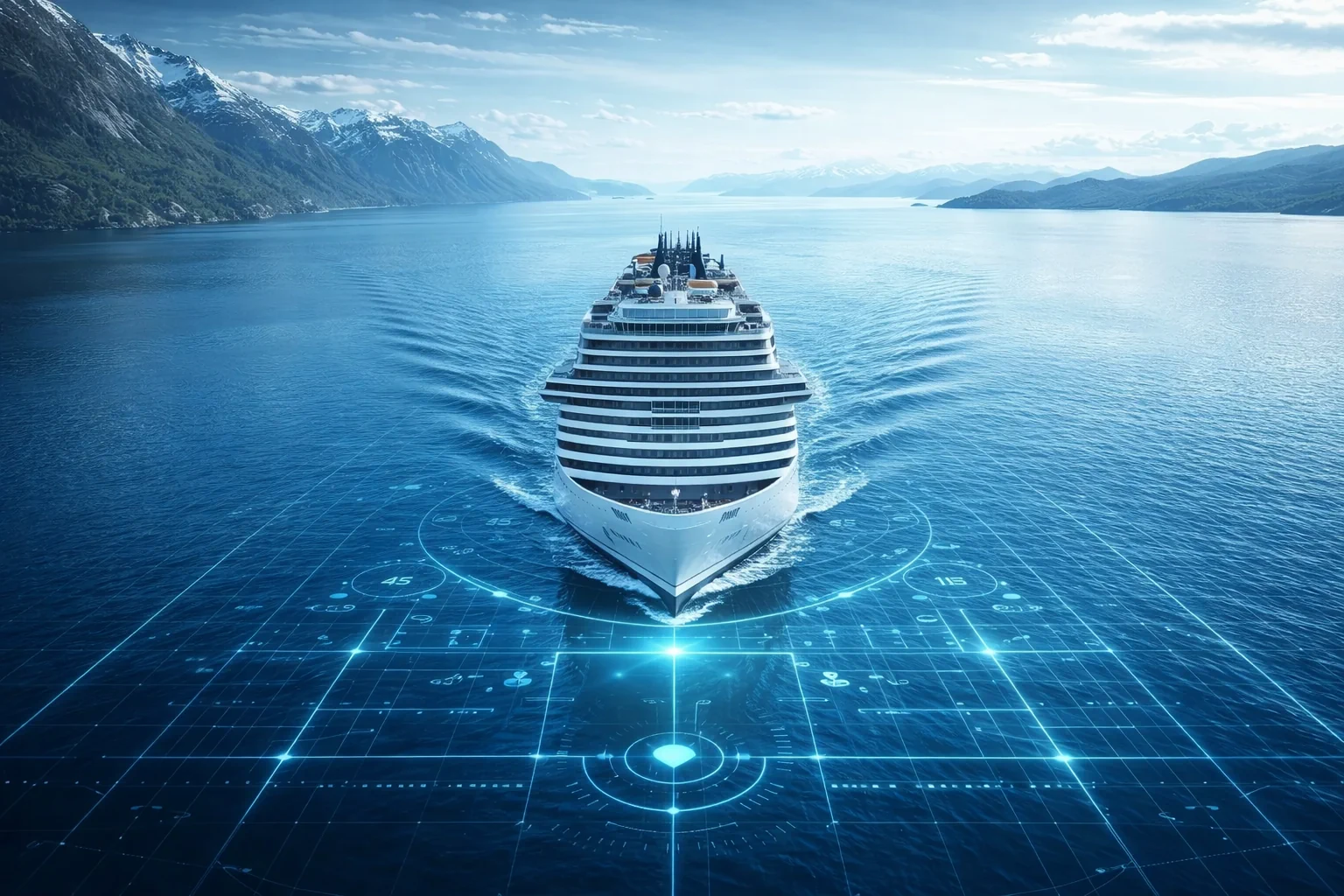
In the ever-evolving world of cruise travel, the promise of new destinations and luxurious experiences often takes center stage. However, beneath the glamour, a quiet revolution is underway, driven by a commitment to sustainability and cutting-edge technology. MSC Cruises, one of the world’s leading cruise lines, is at the forefront of this transformation with its innovative OptiCruise system, a sophisticated, AI-driven itinerary optimization tool that is fundamentally reshaping how their ships navigate the globe in 2026 and beyond.
No longer just a buzzword, OptiCruise is now a fully implemented reality across MSC’s impressive 24-ship fleet and part of it’s Sustainability Plan. While its development was first publicized in 2024, the complex nature of cruise planning means that the real-world impact of these algorithms is only now becoming evident in the 2026 itineraries currently sailing or open for booking. This system isn’t just about saving fuel; it’s about crafting a more efficient, environmentally responsible, and ultimately, a smarter cruise experience.
The Brains Behind the Journey: How OptiCruise Works
At its core, OptiCruise is a testament to the power of artificial intelligence in tackling complex logistical challenges. Imagine a supercomputer that analyzes an astronomical amount of data points, not just current weather patterns but historical ocean conditions, port operational hours, specific vessel hydrodynamics, and even real-time economic factors like fuel prices. It then runs billions of simulations to determine the most efficient way to get from Point A to Point B, and then to Point C, and so on.
The traditional approach to itinerary planning often prioritized a direct path, sometimes requiring ships to “sprint” at high speeds between ports to meet tight schedules. This high-speed travel, however, is disproportionately fuel-intensive, leading to significantly higher emissions. OptiCruise flips this paradigm. It calculates the optimal sequencing of ports, the most fuel-efficient arrival and departure times, and the precise speed and trim of the ship for every segment of the journey. This might mean adjusting a port visit by a few hours, or extending a “sea day,” allowing the ship to maintain a constant, slower, and far more efficient speed.
The tool wasn’t born in a vacuum; it’s the result of a collaborative effort with OPTIMeasy (University of Genoa) and backed by the European Union’s Project CHEK, an initiative dedicated to finding low-carbon solutions for the entire shipping industry. This academic and industrial synergy has resulted in a robust system capable of delivering tangible environmental benefits.
Tangible Impact: A Greener Fleet for 2026
The proof of OptiCruise’s effectiveness lies in the numbers. After extensive testing on the MSC Bellissima in 2024, where it demonstrated a 10% to 15% reduction in fuel consumption and emissions, MSC committed to a fleetwide rollout. As of early 2026, the MSC Group proudly announced that their suite of optimization tools, including OptiCruise for planning and Oceanly Performance for real-time adjustments, had successfully avoided approximately 50,000 tons of CO2 emissions over the past year. This isn’t just a corporate talking point; it’s a significant stride towards their ambitious goal of achieving net-zero emissions by 2050.
For the passenger, this commitment translates into a cruise experience that, while subtly different, is enhanced by its efficiency. By reducing operational costs through less fuel consumption, MSC can help maintain more competitive ticket prices. More importantly, the focus on optimized speeds can lead to more relaxed sailing and, in some cases, longer, more immersive port experiences.
2026 Itineraries: The OptiCruise Difference in Action
Let’s look at some concrete examples from MSC’s 2026 offerings that showcase the influence of OptiCruise:
1. The Inaugural Alaska Season (MSC Poesia, Summer 2026):
MSC’s highly anticipated debut in Alaska, sailing from Seattle, is a prime example of OptiCruise at play. The rugged Alaskan coastline, with its vast distances and often unpredictable weather, demands precise planning. Rather than rushing between iconic glaciers and bustling port towns, the MSC Poesia itineraries for 2026 often feature carefully timed “sea days” that allow for a consistent, fuel-efficient speed while providing ample opportunities for scenic cruising through fjords and past wildlife hotspots.
Example: A typical 7-night Alaska itinerary might include a full day of scenic cruising in Glacier Bay National Park (a low-speed zone for environmental protection) followed by a slightly longer sail to Juneau. OptiCruise ensures that the travel to Juneau is done at an optimal speed rather than an accelerated pace, allowing passengers more time in port without increasing the carbon footprint unnecessarily. The emphasis here is on maximizing the immersive experience without compromising efficiency.
2. The MSC World Cruise 2026 (MSC Magnifica):
A circumnavigation of the globe is the ultimate test for any optimization system. The MSC World Cruise 2028, aboard the MSC Magnifica, is a marvel of OptiCruise planning. This epic 115-day journey visits 47 destinations in 32 countries. The sheer scale and complexity mean that every nautical mile counts.
Example: The itinerary features an impressive seven overnight stays in various iconic cities such as Rio de Janeiro, Buenos Aires, Sydney, Auckland, and Dubai. These extended stays are not just about deeper cultural immersion; they are a direct outcome of OptiCruise. By docking overnight, the ship can connect to shore power (where available), completely eliminating its own engine emissions in port. The time saved by not having to travel to a new port every day also allows for a more relaxed, fuel-efficient pace during the longer ocean crossings, significantly reducing overall emissions for the entire voyage.
3. Eastern Mediterranean Adventures (MSC Lirica & MSC Divina, Summer 2026):
Even in well-established regions like the Eastern Mediterranean, OptiCruise is introducing subtle but significant changes. For 2026, MSC is strategically swapping some Santorini stops for Syros, Greece, and introducing more overnight stays in bustling destinations like Mykonos.+1
Example: The repositioning to Syros is not just about offering a “hidden gem” experience. It’s also about optimizing the flow of traffic in highly congested areas and finding ports that fit seamlessly into an OptiCruise-optimized sequence, reducing idle time and minimizing high-speed sprints between popular islands. An overnight in Mykonos, for instance, allows for evening exploration while enabling the ship to remain stationary and more efficient for an extended period, contributing to the overall 15% reduction target.
The Future of Smart Cruising: Beyond OptiCruise
MSC isn’t stopping with just route optimization. The continuous evolution of their smart ship strategy is evidenced by their recent announcement in January 2026 regarding the integration of Smart Mooring technology across their fleet. This new AI-driven system uses predictive analytics to manage the docking process itself, factoring in real-time wind, currents, and tidal data to minimize the fuel consumption and emissions typically associated with complex port maneuvers.
This holistic approach – from planning the journey with OptiCruise to executing it with real-time performance monitoring and now smart docking – underscores MSC’s comprehensive vision for sustainable cruising. For passengers in 2026, this means enjoying not just the spectacular views and luxurious amenities, but also the peace of mind that comes from sailing on a fleet that is actively leveraging the most advanced technology to protect the very oceans it traverses. The future of cruising is not just about where you go, but how you get there, and with OptiCruise, MSC Cruises is charting a decidedly greener course.
