
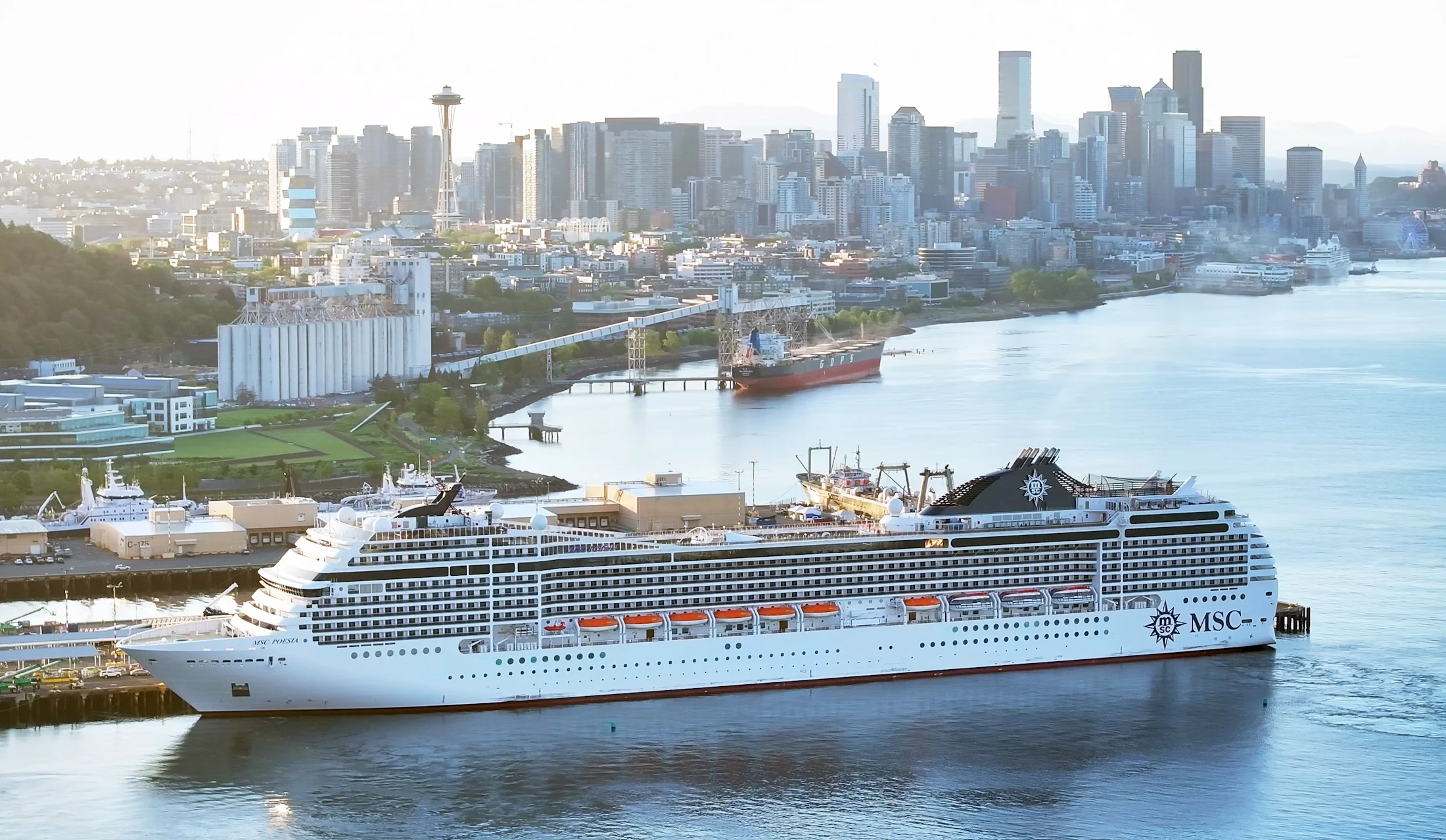
Fuel prices can change quickly, especially when wars, supply disruptions or other global events affect the energy market. That can leave cruisers wondering whether MSC could add a surprise fuel surcharge after they have already booked.
The short answer is that MSC Cruises reserves the right to adjust certain cruise prices when fuel costs increase. However, the current terms for cruises booked in the United States include important protections based on when the cruise is paid in full and how close it is to departure.
MSC’s policy is also different from the fixed per-person, per-day surcharge often associated with other cruise lines. Here is how the MSC fuel surcharge policy works, what could trigger an adjustment and what cruisers should do if their price changes.
Finally, while this policy exists, it is very rarely exercised Think of it more as a security blanket in case fuel prices get way-out-of-whack
2026 Fuel Surcharge Update
MSC Cruises announced that it would not introduce a fuel surcharge for summer 2026, despite an increase in global fuel prices. MSC said guests could book their summer vacation knowing that the price shown at booking would be the price they paid.
This was a temporary public commitment for summer 2026, not a permanent removal of the fuel-adjustment language from MSC’s booking terms. You can read more in our MSC summer 2026 fuel surcharge update.
What Is a Cruise Fuel Surcharge?
A fuel surcharge is an additional amount a cruise line may collect when the cost of operating its ships rises unexpectedly.
Cruise fares are often set months or even years before a ship sails. If fuel prices increase significantly between the time a cruise is booked and the departure date, the cruise line could end up paying considerably more to operate that sailing than originally anticipated.
A fuel surcharge or fuel-related price adjustment allows the cruise line to pass some of that increase to its passengers.
Fuel surcharges are not common on major cruise lines today, but many cruise contracts still contain language allowing them. The cruise line does not have to introduce a surcharge simply because fuel prices rise. The contract gives it the option to do so.
What Does MSC’s Fuel Surcharge Policy Say?
The MSC Cruises USA Standard Booking Terms and Conditions apply to Cruise Packages booked in the United States or through MSC Cruises USA.
Under the price-guarantee section of those terms, MSC says it will not change the Cruise Package price after full payment has been received or within 20 calendar days of departure, whichever protection occurs first.
Before that point, MSC reserves the right to modify the contract price because of changes in:
- Fuel costs for operating the ship
- Exchange rates relevant to the Cruise Package
The terms say that these price variations may be upward or downward. In other words, the language does not limit MSC to increases, although the terms do not explain how or when a downward adjustment would be provided.
This policy is specific to bookings made in the United States. Travelers who book through another MSC market should check the terms supplied with their reservation because the rules may be different.
Can MSC Add a Fuel Surcharge After You Book?
MSC could potentially increase the price after the initial booking if the reservation has not been paid in full and the cruise is more than 20 days away.
This means that paying a deposit does not necessarily protect the original price from every possible fuel-related adjustment.
For example, a guest might book a cruise 18 months before departure and pay only the required deposit. If fuel costs rise before the final balance is paid, MSC’s terms give the company the right to adjust the Cruise Package price.
That does not mean MSC will automatically make an adjustment. The policy gives the company the option, but MSC can choose to absorb higher costs, increase prices only for new bookings or take other steps instead of modifying existing reservations.
Why Are MSC Fuel Surcharges So Rare?
Crude oil prices regularly move above thresholds mentioned in some cruise contracts, yet the largest cruise lines rarely add new fuel charges to existing passenger bookings.
There are several reasons the contractual right to impose a surcharge is usually treated as a last resort.
Adding a surprise charge to an already booked vacation is never going to be popular. A fuel surcharge can create cancellations, complaints, negative news coverage and frustration for travel agents who must explain the new charge to their clients. It can also undermine the price confidence cruise lines try to create when asking customers to book vacations far in advance.
MSC and other major cruise lines generally have a strong incentive to avoid retroactive passenger charges unless the increase in operating costs becomes unusually severe and prolonged.
The cruise industry’s last widespread use of fuel surcharges came during the extraordinary oil-price spike of 2007 and 2008. That is a much different situation from ordinary week-to-week fluctuations in the energy market.
Fuel Purchasing and Price Protection
Major cruise operators do not necessarily buy all their fuel at the daily market price. Some use fuel hedges, swaps, advance purchases or longer-term supply arrangements to make energy costs more predictable.
MSC is privately held and does not publicly disclose detailed fuel-hedging positions in the same way that publicly traded cruise companies report them to investors. It would therefore be difficult to say how much of MSC’s future fuel use is currently protected or purchased in advance.
However, the broader cruise industry uses financial and purchasing strategies that can reduce its immediate exposure to daily oil-price changes. A short-term increase in crude oil does not necessarily produce an equally immediate increase in the price MSC pays to operate every ship.
More Efficient Cruise Ships
Fuel efficiency also gives cruise lines another way to manage higher energy costs.
MSC has invested in more efficient engines, route optimization, heat-recovery systems, improved hull coatings and technology that helps ships operate more efficiently. Newer ships also use flexible-fuel technology, including vessels designed to operate on liquefied natural gas.
These improvements do not eliminate the financial impact of higher fuel prices, but they can reduce the amount of fuel needed to operate the fleet.
Higher Costs Can Be Added to Future Fares
Increasing future cruise fares is usually easier than adding a separate charge to an existing reservation.
If MSC expects fuel costs to remain elevated, it can account for those expenses when setting prices for new bookings. The higher cost becomes part of the advertised cruise fare instead of appearing as an unpopular fuel-surcharge line item.
This does not necessarily mean every cruise fare will increase by the same amount. MSC uses dynamic pricing, so fares already move based on demand, availability, ship, itinerary, cabin category and departure date.
A higher base fare may be less noticeable to customers than a separate fee added after booking, even when both approaches help cover the same increase in operating expenses.
The Clause Is There for Extreme Conditions
The fuel-adjustment language gives MSC protection if energy markets experience a severe and sustained shock.
It should not be interpreted as a charge that automatically appears whenever crude oil reaches a particular price. MSC’s current U.S. terms do not publish a $65-per-barrel trigger, and ordinary market fluctuations have generally not resulted in MSC adding fuel adjustments to passenger bookings.
For everyday cruise planning, a fuel surcharge should be viewed as a low-probability risk rather than an expected expense. It would likely take an unusually serious and prolonged increase in fuel costs before MSC decided that the customer backlash was worth imposing a new charge.
Can MSC Add a Fuel Surcharge After Final Payment?
MSC’s U.S. price-guarantee language appears to provide significant protection once full payment has been received.
The terms say that no change will be made to the Cruise Package price once MSC has received full payment or once the cruise is within 20 days of departure, whichever occurs first.
Based on that language, paying the full cruise balance early may reduce the risk of a later fuel-related price adjustment.
However, MSC’s promotional terms and conditions also contain broader language stating that MSC reserves the right to pass on any fuel surcharge without prior notice to all guests.
Those two statements are not perfectly aligned.
The more detailed price-guarantee section appears to protect a fully paid Cruise Package from a fuel adjustment, while the promotional fine print preserves a broader right to pass on a surcharge. Because of that inconsistency, guests should not treat early payment as an absolute guarantee without confirming the terms attached to their specific reservation.
If fuel prices are unusually volatile, guests can ask MSC or their travel agent to confirm in writing whether paying in full will lock the Cruise Package price.
Does the 20-Day Rule Mean MSC Can Add a Charge 21 Days Before Sailing?
Potentially, but only if the other conditions also apply.
The policy does not mean MSC has an unrestricted ability to change every reservation until the cruise reaches the 20-day mark. If MSC has already received full payment, the price-guarantee language appears to apply even when the sailing is still several months away.
A fuel adjustment would therefore appear to be possible only before both of these events:
- MSC receives full payment
- The cruise reaches the final 20 days before departure
Whichever event occurs first appears to end the fuel-adjustment window.
How Would MSC Collect a Fuel Surcharge?
MSC’s current U.S. terms do not explain exactly how a fuel-related adjustment would be collected.
Possible methods could include:
- Adding the amount to the remaining cruise balance
- Issuing a revised booking confirmation
- Requiring an additional payment before departure
- Adding a separate fuel-related line item to the reservation
The terms do not say that the charge would automatically be added to the guest’s onboard account. Unless MSC announces a specific collection process, cruisers should not assume that a fuel surcharge would be paid after boarding.
If a reservation changes, the guest should receive an updated confirmation showing the revised total and any new line items.
Is a Fuel Surcharge the Same as Taxes and Port Fees?
A fuel adjustment is different from government taxes, fees and port expenses.
MSC’s U.S. booking terms provide separate rules for these charges. The company reserves the right to collect increases in government fees, taxes and port expenses at the time of sailing, even if the Cruise Package has already been paid in full.
This creates an important distinction:
- A fuel-related price adjustment appears to be restricted after full payment or during the final 20 days.
- Government taxes and port expenses may still change after full payment.
A price increase does not necessarily mean MSC has imposed a fuel surcharge. Guests should check the updated invoice to determine whether the change came from fuel, taxes, port expenses, airfare or another part of the booking.
A fuel surcharge is also different from MSC’s Hotel Service Charge. The Hotel Service Charge supports onboard crew and services, while a fuel adjustment is connected to the cost of operating the ship.
You can read more about recent service-charge changes in our guide to MSC gratuity increases and price protection.
Would Children Have to Pay an MSC Fuel Surcharge?
MSC’s current percentage-based policy does not provide separate adult, child or infant rates.
Because the adjustment is connected to the price of the cruise, a child booked at a reduced fare could potentially have a smaller adjustment than an adult. However, MSC does not explain how it would calculate the charge for children sailing free or at a heavily discounted third- or fourth-guest rate.
Kids Sail Free applies to the base cruise fare on qualifying reservations. It should not automatically be interpreted as an exemption from every tax, fee or future fuel adjustment.
MSC would need to explain how children and infants are treated if it introduces a fuel-related charge.
Does Booking Through a Travel Agent Change the Policy?
Booking through a travel agent does not automatically remove MSC’s right to adjust the cruise price.
MSC’s U.S. terms state that the passenger’s travel agent acts on behalf of the passenger. Notices and booking information received by the travel agent may be treated as having been received by the guest.
If MSC changes the price, the travel agent should receive an updated invoice or confirmation and communicate the change to the guest.
The more important question is which MSC market issued the reservation. A cruise booked through MSC Cruises USA may have different terms from an otherwise identical cruise booked through MSC’s United Kingdom, Canadian or European operations.
Guests should save the version of the terms that was provided when the reservation was made.
Has MSC Charged a Fuel Surcharge Before?
Fuel surcharges are not merely theoretical. MSC used a fuel supplement during the period of unusually high fuel prices in 2007 and 2008.
MSC later eliminated the charge for 2009 bookings after fuel prices stabilized. Contemporary reports said guests who had already paid the fuel supplement would receive an onboard credit equal to the amount collected.
At the time, MSC also reserved the right to introduce a fuel supplement again if prices increased.
That history shows that MSC can use a surcharge when fuel markets become unusually expensive. However, the current percentage-based terms should be used when evaluating today’s reservations. The formula, protections and collection process from an older surcharge may no longer apply.
What Should You Do If MSC Adds a Fuel Charge?
Start by comparing the revised invoice with the original booking confirmation.
Check the following information:
- Whether MSC has received full payment
- How many days remain before departure
- Which MSC market issued the reservation
- Whether the increase is labeled as fuel, taxes, port expenses or another charge
- Whether the original booking was modified before the price changed
- Which version of MSC’s terms applied when the cruise was booked
If the increase is identified as a fuel adjustment, ask MSC or the travel agent to provide:
- The contract provision authorizing the adjustment
- The fuel-price index used
- The baseline fuel price
- The dates used for the comparison
- The percentage calculation
- The portion of the cruise price included in the calculation
- An explanation of how the adjustment applies to each guest
Guests who had already paid in full should specifically ask how the increase fits with the price-guarantee language in MSC’s U.S. booking terms.
Keep copies of all confirmations, invoices, emails and terms. This will make it easier to identify when the price changed and whether the correct policy was applied.
Should You Pay Off Your MSC Cruise Early?
Paying the balance early may provide additional price protection under MSC’s U.S. terms, but it is not the right decision for every guest.
Before making an early payment, consider:
- Whether the deposit is refundable
- Whether the cruise might need to be canceled or changed
- The cancellation schedule
- Whether the credit card includes travel protections
- Whether the money would earn interest elsewhere
- Whether MSC has confirmed that full payment locks the fare
For guests who know they will take the cruise and are concerned about volatile fuel prices, early payment may offer some peace of mind. Guests who need flexibility may prefer to keep their money until the normal final-payment deadline.
The value of early payment depends on the reservation and the guest’s financial situation, not just the possibility of a fuel surcharge.
The Bottom Line
MSC Cruises reserves the right to adjust certain cruise prices when fuel costs rise. For U.S. bookings, the current terms use a formula equal to 0.33% of the cruise price for every $1-per-barrel increase in fuel.
MSC’s policy does not currently include the widely reported $65 oil-price trigger or a fixed $12-per-person, per-day charge.
The company’s U.S. price guarantee also appears to protect the Cruise Package price after full payment has been received or once the cruise is within 20 days of departure. However, broader language in MSC’s promotional terms makes it important to check the documents attached to each individual reservation.
Fuel surcharges remain unusual. MSC has several options before it needs to add a new charge to an existing booking, including managing fuel purchases, improving ship efficiency and raising fares for future customers.
Unless the cruise industry is facing an extraordinary and prolonged fuel-price crisis, most MSC guests should view a surprise surcharge as a possibility hidden in the fine print, not an expense they should expect to see on their cruise statement.