
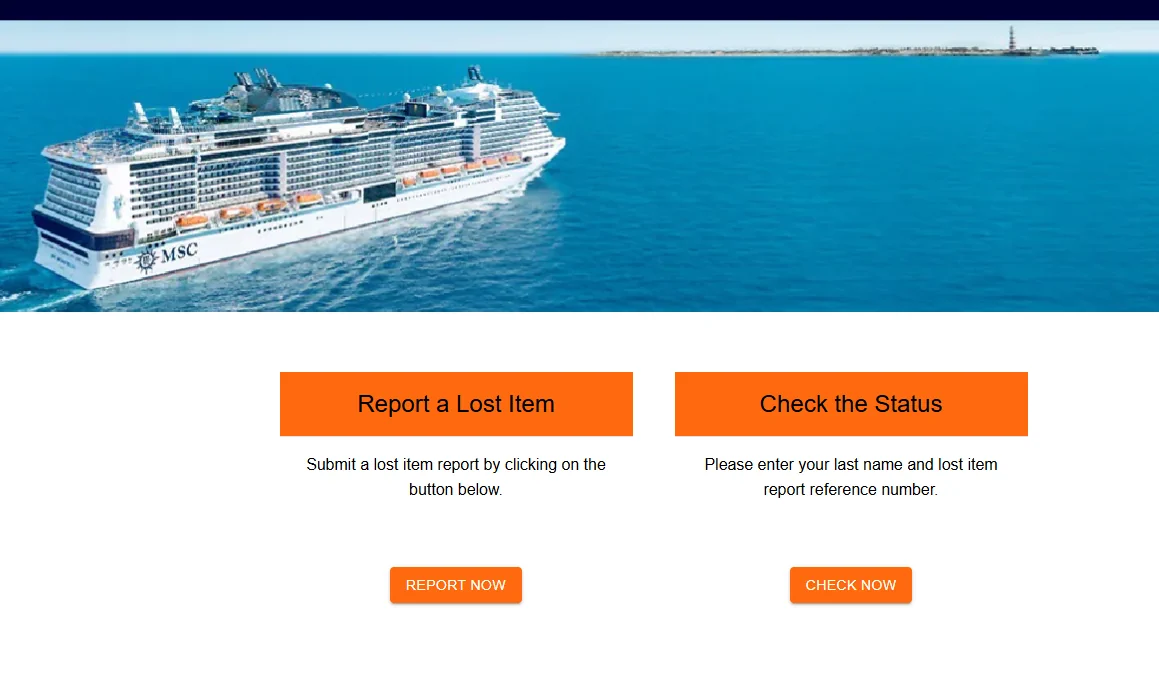
If you forget something on an MSC cruise ship, act as soon as you notice. If you are still onboard, go straight to Guest Services, which MSC also refers to as Reception in some materials. If you have already left the ship after a U.S. sailing, use the MSC Lost & Found portal. For other sailings, contact MSC customer service by email and call MSC customer service if the email route does not move things forward.
The frustrating part is that forgotten items do not always get handled immediately. Lost items not found prior to leaving the ship are generally collected after the following sailing. That means a found item may not be ready the same day you disembark. You may need to return to the port, schedule pickup, or choose to donate the item if recovery is not practical.
The quick answer
For most personal items, this is the best order of action:
- If you are still on the ship, go to Guest Services immediately.
- If you already disembarked from a U.S. sailing, submit a report through MSC’s Lost & Found portal.
- If your sailing was not U.S.-based, email MSC customer service with your booking number, item details, and the place you think you left it.
- If you do not get traction on a non-U.S. sailing, call MSC customer service for your booking market.
- If the item is found, be prepared for port pickup, scheduled pickup, donation, or shipping at your expense when MSC offers that option.
Do not wait if the item is important. A phone, wallet, passport, medication bag, glasses, child’s toy, charger, jewelry, or cabin-safe item is much easier to chase while you are still onboard than after everyone has cleared the ship.
If you are still onboard
Go to Guest Services as soon as you realize something is missing. MSC’s U.S. lost-items guidance says guests should visit the Guest Services Desk and complete a Lost Items Form. MSC’s international onboard FAQ uses Reception or Guest Services language, so the desk name may vary by ship or region, but the practical step is the same: report it in person while crew can still help search.
Be specific when you report the item. Tell Guest Services what the item is, where you last saw it, when you noticed it was missing, your cabin number, and any detail that makes it easy to identify. If you left sunglasses in the theater, a phone at a lounge table, or a tablet in the cabin safe, say that plainly. The more specific you are, the less guesswork the crew has to do.
If the item might have been left in your cabin, do not rely only on a quick look around. Check the safe, bathroom shelves, bedside drawers, closet, under-bed storage, outlets, balcony area, and bags that may have been repacked in a hurry. I recommend checking the entire cabin, including closets and bathroom areas, before leaving.
If you already got off the ship
Once you are off the ship, the process depends on the sailing and the market that handles the request. The safest wording is to separate U.S. sailings from other regions because MSC’s public guidance and the visible portal are not universal for every ship in every market.
U.S. cruises
For U.S. cruises, MSC directs guests to the online MSC Lost & Found portal. The portal should be treated as the route for ships based in the U.S., not as a blanket global lost-and-found system for every MSC ship everywhere. If your U.S. sailing’s ship appears in the portal, choose the ship and complete the report. MSC’s U.S. guidance says you should receive a confirmation email with a reference number, and a representative will follow up if an item matching your description is found.
Other regions or unclear booking markets
For non-U.S. sailings, use MSC customer service by email with your booking number, a detailed item description, and the likely location. If the email route does not go well, you should call MSC customer service.
This is a place to avoid overconfidence. MSC’s U.S. page includes an email route for other regions, but regional MSC sites can use local customer-service contacts. If you booked through a non-U.S. MSC market, your confirmation email, booking documents, local MSC website, travel agent, or MSC customer-service phone line may be the better practical route.
What details to include in your lost-item report
A good lost-item report should make the item easy to recognize and easy to connect to your sailing. Include:
- Booking number
- Full name and contact information used on the booking
- Ship name and sailing dates
- Cabin number, if you know it
- Item type, brand, color, size, and any distinctive marks
- Serial number, case color, lock-screen description, luggage tag, or other identifier when relevant
- Where you think the item was left
- Approximate date and time you last had it
- Whether the item contains medication, travel documents, payment cards, or other sensitive contents
For electronics, include enough detail to identify the device without sharing unnecessary private information. For example, a phone model, case color, and lock-screen description may be useful. For jewelry, glasses, bags, or children’s items, describe colors, brands, engravings, initials, and anything distinctive.
Will MSC ship the item back?
MSC’s U.S. guidance says that if a lost item is found, shipping may be arranged at the guest’s expense. Treat that as a possibility, not a promise. Availability, cost, timing, and carrier options can depend on the item, its size and weight, your location, customs rules, and the port or office holding the item.
Some found items may require port pickup, scheduled pickup, or donation. If returning to the port is unrealistic, ask what options are available once MSC confirms the item has been located. Do not assume MSC can mail everything back or that shipping will be immediate.
Lost luggage is handled differently
A suitcase that is lost or damaged during boarding, onboard handling, or disembarkation is not the same process as a forgotten phone or sunglasses. MSC’s U.S. guidance separates luggage from personal lost items. For luggage issues onboard, guests should go to Guest Services and complete the required luggage form. For luggage damage or loss noticed during disembarkation, MSC directs guests to speak with staff at the cruise terminal and keep the completed form as documentation.
What to check before you leave the ship
The best lost-and-found strategy is to avoid needing it. Before you leave your cabin for the last time, do a slow sweep rather than a quick glance. It also helps to plan your last-day packing the same way you plan what to pack in your MSC cruise carry-on and other essentials.
Check these spots:
- Cabin safe
- Outlets and USB ports
- Nightstands and drawers
- Closet shelves and hangers
- Bathroom shelves, hooks, and shower area
- Under the bed and under the sofa
- Balcony furniture and rail area, if you had a balcony cabin
- Mini fridge area
- Desk surface and vanity area
- Kids’ beds, toy spots, and stroller storage areas
- Passport, wallet, medication, glasses, jewelry, headphones, tablets, chargers, and cruise cards
MSC’s disembarkation guidance specifically reminds guests to check for valuables in the safe, chargers, and children’s toys, and says retrieving forgotten items after disembarkation can be challenging. That is exactly why a full final-cabin sweep is worth the extra few minutes.
For future sailings, keep valuables, travel documents, money, jewelry, electronics, medication, diapers, and anything needed at short notice in your hand luggage. MSC’s luggage guidance says fragile, personal, and valuable objects should be carried as hand luggage only. These habits also fit naturally with broader MSC embarkation day tips for keeping key items close from day one.
Frequently Asked Questions
When to treat it as more than ordinary lost and found
Most forgotten items are ordinary lost-and-found issues. A misplaced charger, hat, sunglasses, toy, tablet, or toiletry bag should usually go through Guest Services or the post-cruise lost-item process.
If you believe the situation involves theft, criminal activity, a missing person, or an immediate safety concern, do not treat it as only a lost-property form. MSC’s safety guidance tells guests to contact Reception or Guest Services for prompt support and lists telephone 99 for onboard assistance. Use ship staff immediately when safety or security is involved.
Does MSC have a lost and found?
Yes. MSC has onboard lost-item reporting through Guest Services or Reception, and MSC’s U.S. guidance points U.S. cruises to the MSC Lost & Found portal after disembarkation. The process is not identical for every region, so use the route that matches your sailing and booking market.
Can MSC ship my lost item home?
Most of the time. MSC says shipping may be arranged at the guest’s expense when an item is found. Do not assume shipping is guaranteed, free, or fast. Ask for the available options after MSC confirms a match.
What if I lost something in port or on an excursion?
Start with the most likely place. If you lost the item onboard, use MSC’s process. If you lost it in port, at a terminal, on independent transportation, or during a third-party excursion, MSC may not control the item. Still, Guest Services can be a useful starting point while you are onboard because they may know the excursion operator or port contact. The MSC for Me app guide can also help first-time MSC cruisers understand the onboard app, though urgent lost-item help should still go through crew.
What if I think something was stolen?
Tell Guest Services or Reception immediately while onboard. If you are already off the ship, contact MSC customer service and follow the appropriate safety or law-enforcement route for the situation. Do not wait on an ordinary lost-item response if the item involves payment cards, identification, passports, medication, or a serious security concern.
Bottom line
If you forget something on an MSC cruise ship, the fastest path is Guest Services while you are still onboard. After a U.S. sailing, use the MSC Lost & Found portal. For non-U.S. sailings, email MSC customer service with your booking number and a precise description, then call MSC if the email route is not working.
Keep expectations realistic. Found items may not be collected until after a following sailing, and your options may include port pickup, scheduled pickup, donation, or shipping at your expense. Before disembarkation, take the extra time to check the whole cabin. It is a much easier fix before you walk off the ship.